Car shipping insurance does not cover personal items left in the vehicle, weather or natural disaster damage, pre-existing damage, or mechanical and electrical issues. It also excludes damage below the deductible, a broker's liability gap, and damage that exceeds the carrier's policy limits. Standard cargo liability insurance pays only for physical damage caused by carrier negligence; everything else is the shipper's responsibility unless coverage is verified before booking.
Most vehicle damage disputes in auto transport don't happen because carriers are negligent; they happen because shippers assumed they were covered when they weren't. Knowing these gaps before you book is the most effective way to protect your vehicle and your money.
Safeeds Transport works exclusively with FMCSA-licensed, insured carriers. Before you ship, get a free quote and ask our team exactly what coverage applies to your shipment.
What Car Shipping Insurance Actually Covers
Standard auto transport insurance is a cargo liability policy held by the carrier. It covers specific damage under specific conditions, not everything that could go wrong in transit. The two sections below explain what that policy actually triggers on, and when your coverage window opens and closes.
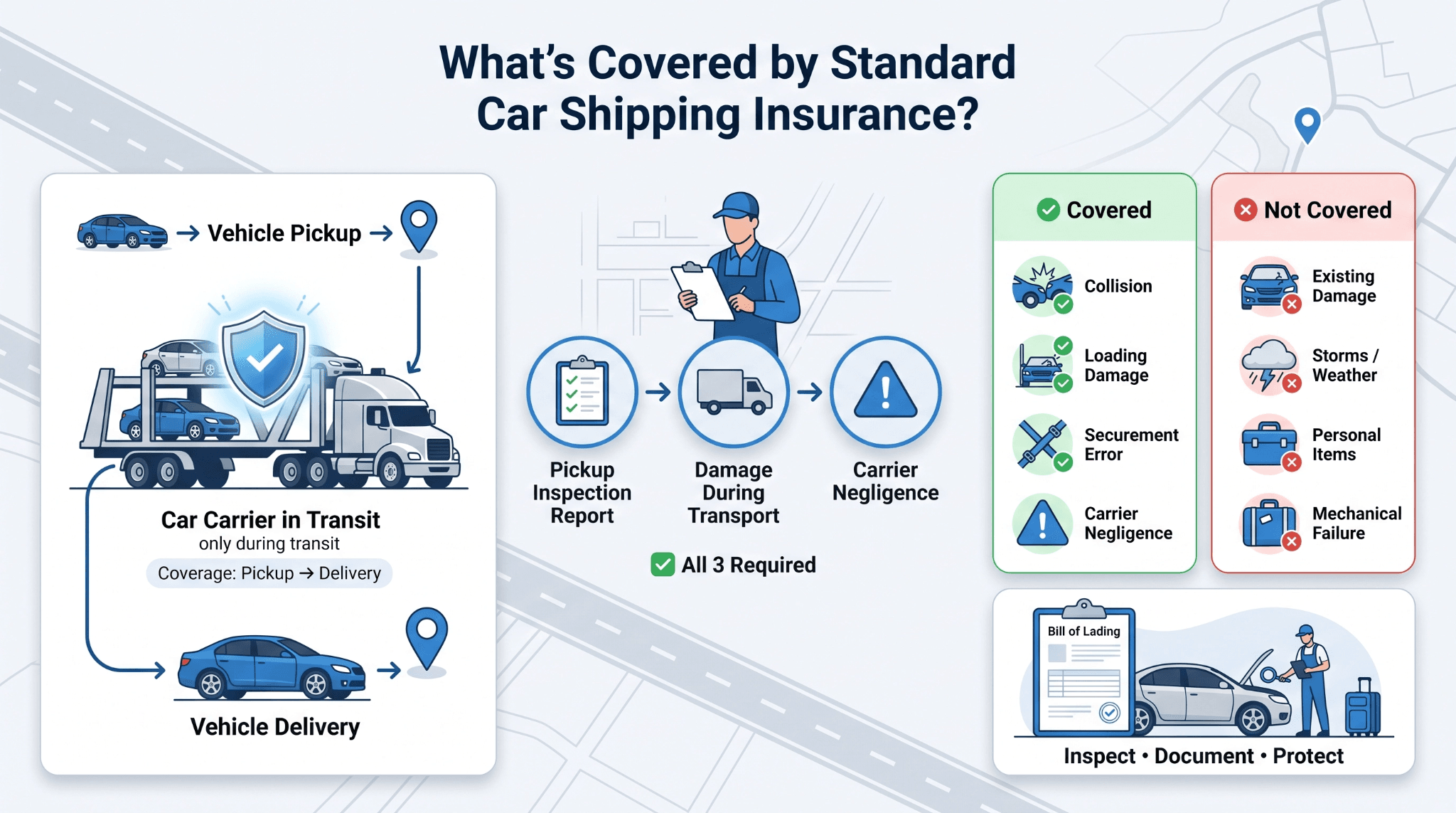
Under FMCSA regulations, all licensed carriers must maintain cargo liability insurance. This covers physical damage caused directly by carrier negligence, improper securing, loading errors, or a driver-caused accident. For a claim to be valid, three conditions must be met:
Damage occurred while the vehicle was in the carrier's possession
Damage was not present at pickup, as documented on the inspection report
Damage resulted from carrier negligence, not an external event
Yes, within limits. Coverage begins when the carrier takes possession at pickup and ends at delivery. The Bill of Lading, signed by both parties at pickup, is the official condition record; damage that can't be traced to it is nearly impossible to claim.
The table below shows exactly where cargo liability coverage starts and stops.
Coverage Trigger | Covered |
Carrier negligence (loading error, accident) | Yes |
Pre-existing damage at pickup | No |
Weather events during transit | No |
Personal items inside the vehicle | No |
Mechanical or electrical failure | No |
What Car Shipping Insurance Won't Cover: The Real Exclusions
This is where most disputes originate. Cargo liability covers carrier negligence and nothing else; the seven exclusions below are structural features of how car shipping insurance works, not fine print.
1. Personal Items Left Inside the Vehicle Aren't Covered
Cargo liability applies to the vehicle only, not personal property inside it. GPS units, laptops, clothing, and bags are never covered, and carriers often prohibit personal items in their terms of service. Remove all personal items from the vehicle before the driver arrives, or photograph everything if removal isn't possible; either way, no recovery comes through a transport insurance claim.
2. Weather and Natural Disaster Damage Falls Outside Coverage
Hailstorms, flooding, fallen debris, and high winds fall outside carrier control and don't meet the negligence threshold for a valid claim. Enclosed transport reduces physical exposure to weather, but carries the same policy exclusions as open transport; the protection is physical, not financial.
3. Pre-Existing Damage Disputes Favor Whoever Has the Paperwork
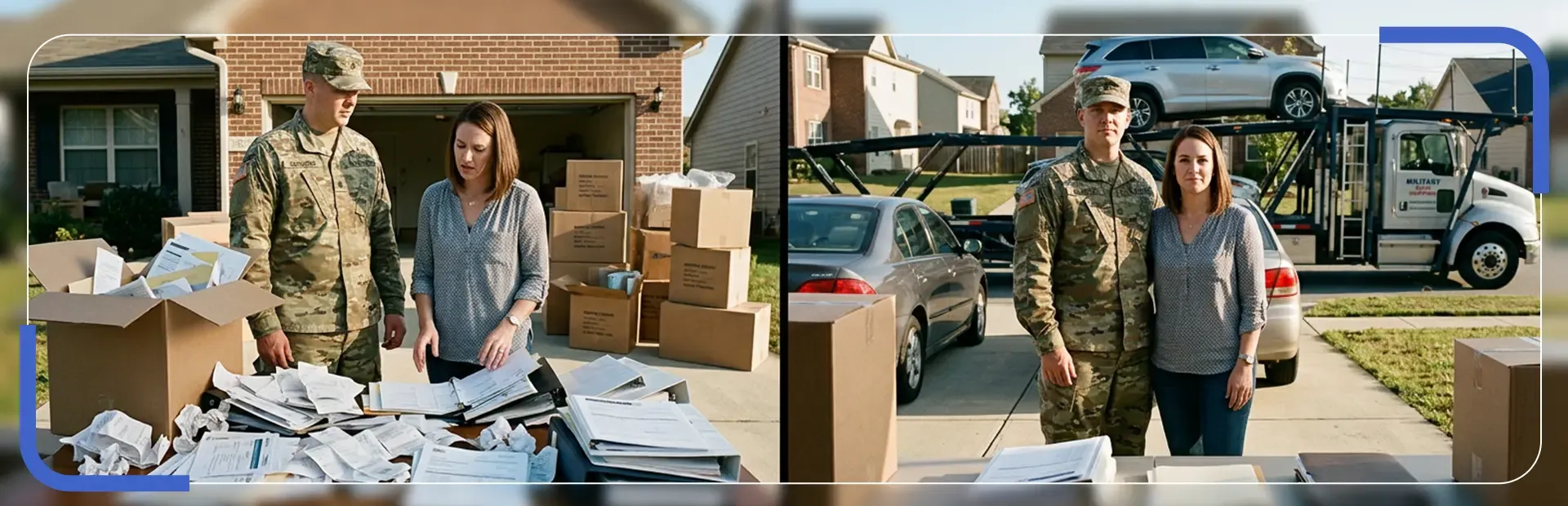
This is the most contested scenario in auto transport claims. Damage that existed before pickup can't form the basis of a claim, even if you didn't notice it until delivery. Carriers rely on the pickup inspection report to prove pre-existing damage; with no paper trail to counter it, shippers have no viable dispute. The condition report is your primary legal protection.
4. Mechanical and Electrical Problems Aren't a Cargo Liability Issue
Cargo liability is not a mechanical warranty. A dead battery, sensor fault, or transmission issue that wasn't documented before shipping isn't covered, regardless of when it appears. The only exception is documented physical impact that caused visible, verifiable mechanical damage directly tied to carrier negligence.
5. Damage Below the Deductible Is the Shipper's Responsibility
Most cargo liability policies carry a deductible, and damage under that threshold falls on the shipper even when the carrier is at fault. Ask for the carrier's exact deductible and policy limits before booking, not after a claim is filed.
6. A Broker's Insurance Doesn't Cover Vehicle Damage
A broker's general liability policy does not cover physical damage to your vehicle during transit under any circumstances. Brokers may carry contingent cargo insurance, but it only activates if the carrier's own policy fails to respond, and it rarely does.
7. Damage Beyond Policy Limits Leaves No Recovery Path
When damage exceeds the carrier's policy limits, you're left without recourse regardless of fault. This is why transporting a car without insurance verification, confirming the carrier's actual coverage limits against your vehicle's value, is one of the costliest mistakes a shipper can make.
The table below brings all seven exclusions together, showing why each applies and what you can do about it before booking.
Exclusion | Why It's Excluded | What to Do |
Personal items | Coverage is vehicle-only | Remove all items before pickup |
Weather/acts of God | Outside carrier control | Consider enclosed transport for high-value vehicles |
Pre-existing damage | Not caused during transit | Document all damage thoroughly at pickup |
Mechanical issues | Not a physical cargo loss | Test and photograph the vehicle before shipping |
Damage below deductible | Policy minimums apply | Request full policy details before booking |
Broker's liability policy | Doesn't cover cargo damage | Confirm the assigned carrier's own coverage |
Damage above policy limits | No recovery path beyond the cap | Verify coverage limits match your vehicle's value |
How Carrier vs. Broker Insurance Works (And Why It Matters)
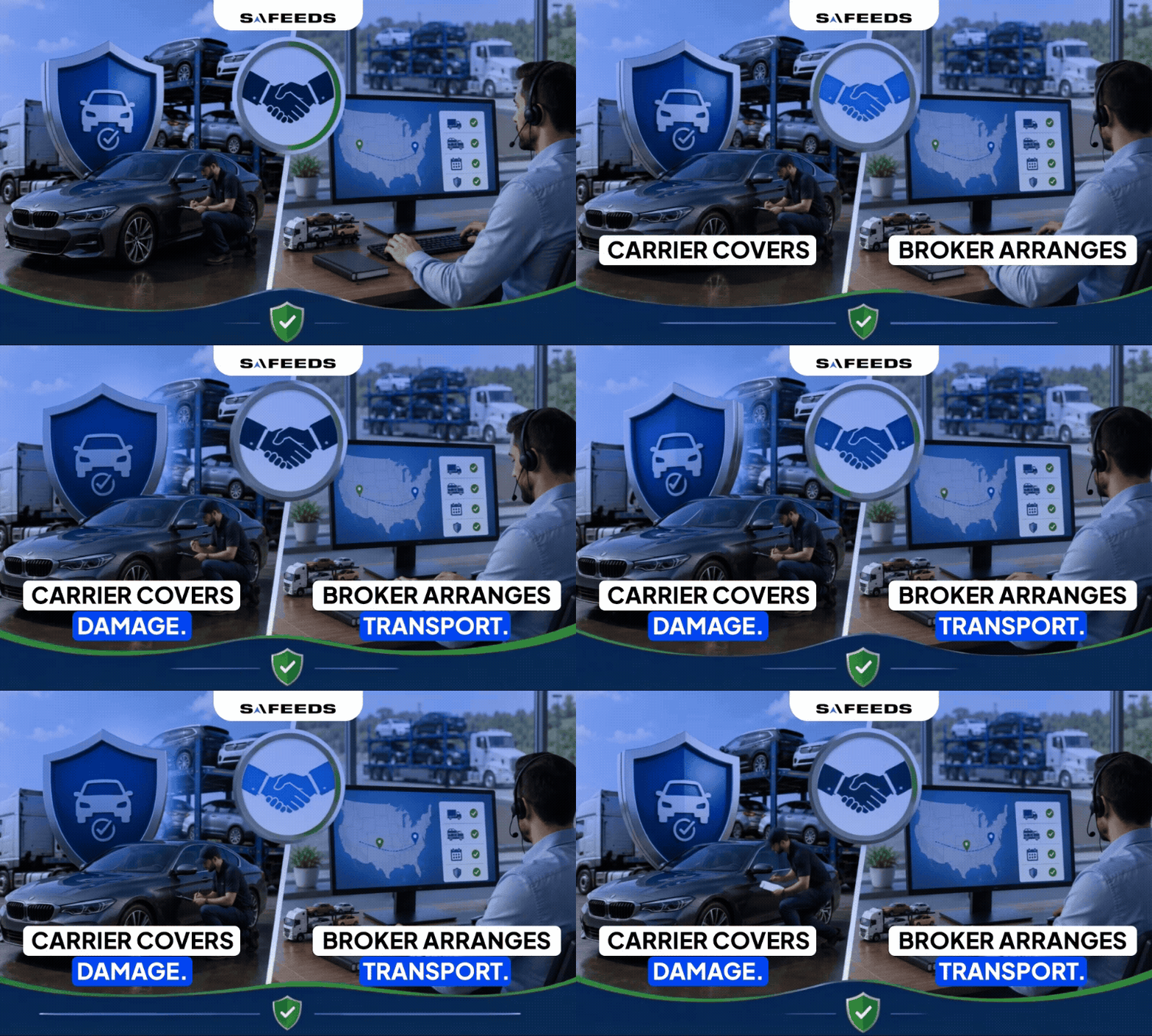
Many shippers book through a broker assuming the broker insures their vehicle; that assumption is incorrect and complicates claims later.
Brokers and carriers carry different types of insurance. Brokers must carry a surety bond of at least $75,000 under FMCSA rules, and many also carry contingent cargo insurance. But that contingent coverage only activates if the carrier's own policy fails to respond, which is difficult to trigger and rarely provides the protection shippers expect.
The line of responsibility between brokers and carriers is one of the most misunderstood areas in auto transport.
The carrier is legally responsible for all cargo damage during transit
The broker can advocate during a claim but has no obligation to compensate you from their own funds
The exception is if negligence in carrier selection by the broker can be demonstrated
Requesting a Certificate of Insurance from the assigned carrier before pickup is non-negotiable
What Happens When You Ship a Car Without Adequate Insurance
Transporting a car without verifying coverage is one of the most avoidable, costly mistakes in auto transport.
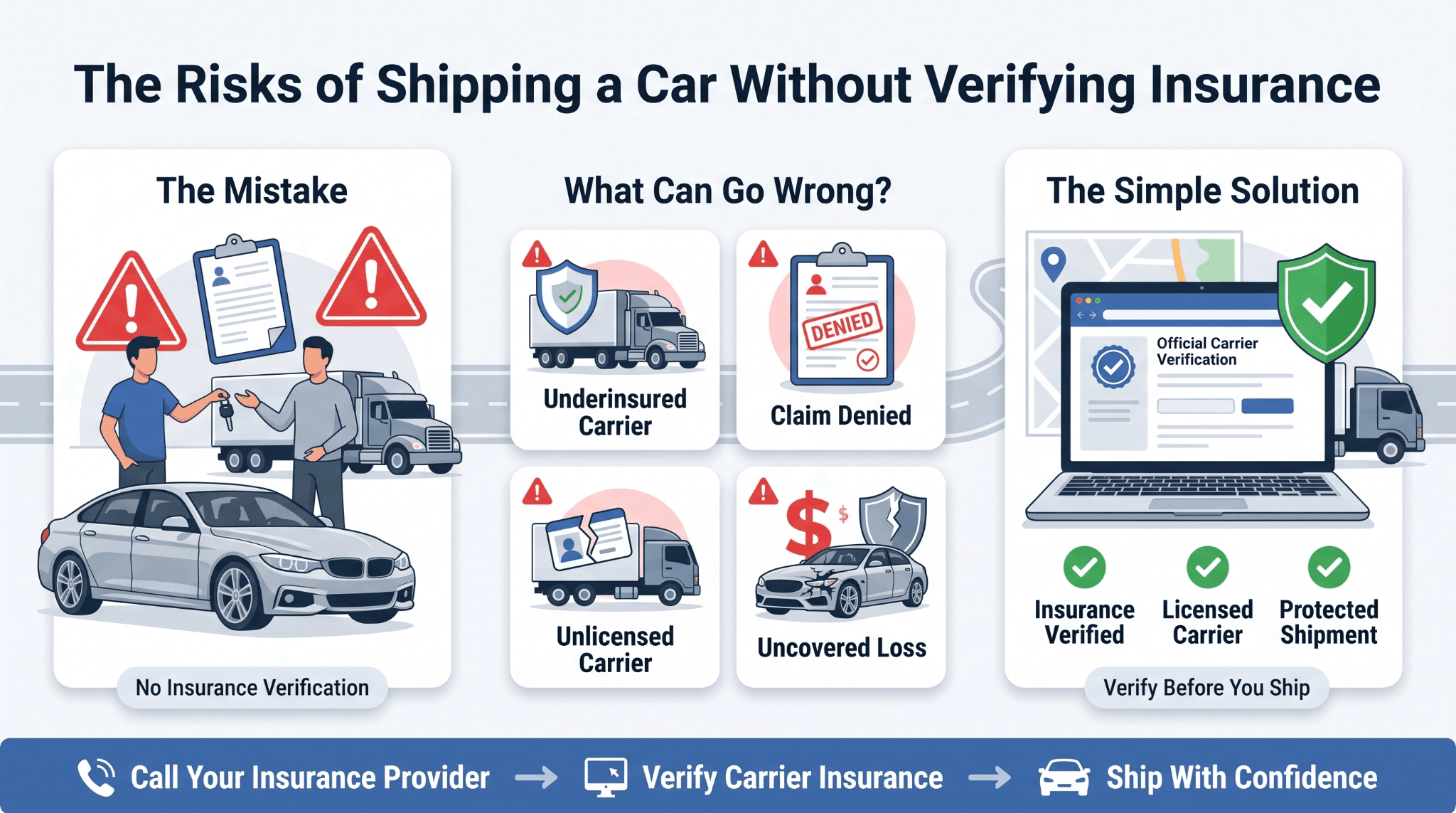
In most cases, no. Standard personal auto policies cover vehicles while being driven, not while loaded on a carrier. Some include theft coverage that may extend to transit, but in-transit collision and cargo damage are typically excluded. Call your insurer and ask directly: does my policy cover physical damage while a third-party carrier transports my vehicle? Get the answer in writing before pickup.
An underinsured carrier may carry limits too low to cover your vehicle's actual value, and a claim can be denied over an exclusion that was never disclosed upfront. In the worst cases, a carrier may be unlicensed and completely uninsured, leaving no legal recourse at all.
The FMCSA's carrier lookup tool lets you verify a carrier's operating authority and insurance status in under two minutes.
How to Protect Yourself Before and After Shipping
Documentation is the most effective protection against a denied claim, regardless of carrier or broker. The two checklists below cover what to capture before pickup and how to respond if damage shows up at delivery.
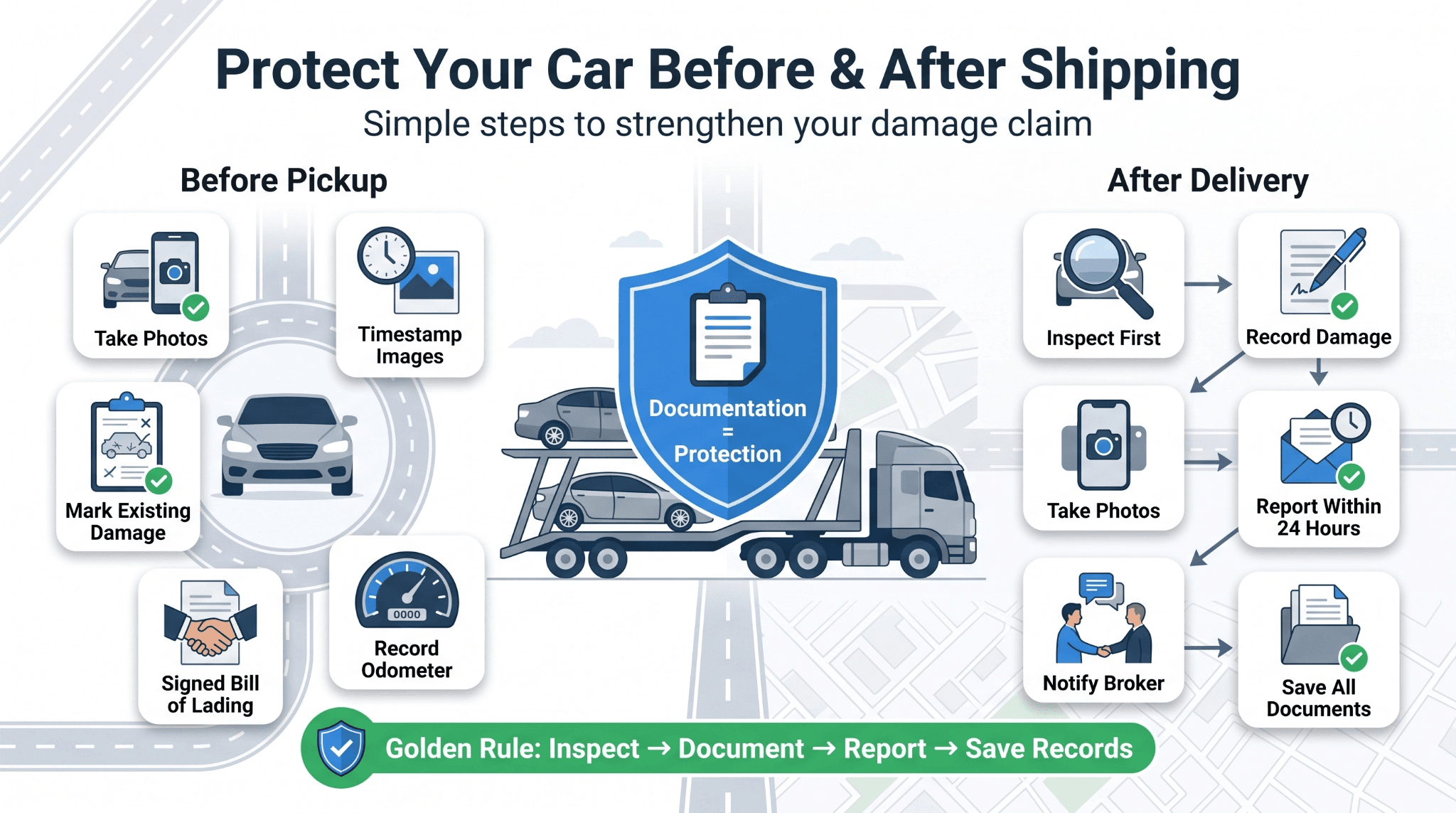
Before your car is picked up, document the following:
Photograph the vehicle from all angles: front, rear, both sides, roof, all four corners
Use timestamped photos for a defensible record
Note every existing scratch or dent on the Bill of Lading; never sign a clean report on a damaged vehicle
Confirm the driver signs the condition report; both parties keep a copy
Record the odometer reading before loading
If your car arrives with damage, follow these steps in order:
Don't sign the delivery receipt until you've fully inspected the vehicle
Note all visible damage on the delivery report before signing
Photograph the damage immediately, with the driver present if possible
Contact the carrier in writing within 24 hours
Notify your broker; a reputable one advocates for resolution immediately
Preserve all documentation: Bill of Lading, photos, and correspondence
As consumer guidance from the FMCSA makes clear, shippers who don't document damage at delivery significantly reduce their ability to pursue a claim.
What Shippers Ask About Car Shipping Insurance
Quick answers to the most common coverage questions.
Does enclosed transport provide better insurance coverage than open transport?
Not automatically. Enclosed transport reduces physical exposure but carries the same policy exclusions as open transport. Ask about supplemental insurance regardless of transport type.
Can I add supplemental insurance for a high-value vehicle?
Yes. Third-party insurers offer in-transit coverage that fills the gaps left by standard cargo liability, especially relevant for classic, luxury, or modified vehicles whose value may exceed a carrier's policy limits. Safeeds can connect you with options based on your vehicle and route.
What is a Certificate of Insurance and should I ask for one?
A Certificate of Insurance (COI) confirms a carrier's active coverage, policy limits, and coverage dates. Every legitimate carrier can provide one on request; ask for it before pickup.
How long do I have to file a damage claim after delivery?
Most cargo liability policies require written notice within 9 months and a formal claim within 2 years, though terms vary by carrier. The safest approach: written notice within 24 hours of delivery, formal claim within 30 days.
Does Safeeds verify carrier insurance before assigning a shipment?
Yes. Every carrier dispatched through Safeeds is verified for active FMCSA operating authority and current cargo insurance before assignment. Ask our support team for the assigned carrier's COI anytime.
Ship With a Broker That Verifies Every Carrier Before You Book
Understanding car shipping insurance gaps is only half the equation; the other half is choosing a partner that does the verification work before your vehicle leaves your driveway.
Safeeds Transport works exclusively with FMCSA-licensed, insured carriers. Every carrier in our network is screened for active cargo coverage before assignment, and our team explains your coverage before you commit. Get your free car shipping quote in 30 seconds, and ship knowing exactly what's covered.