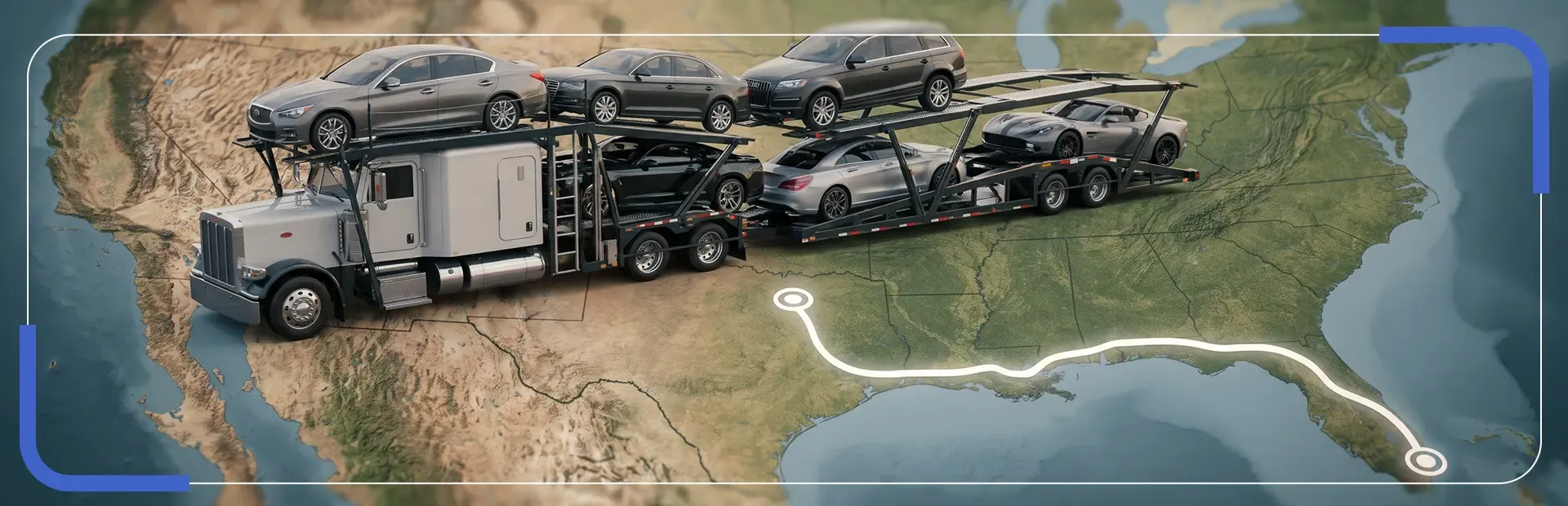
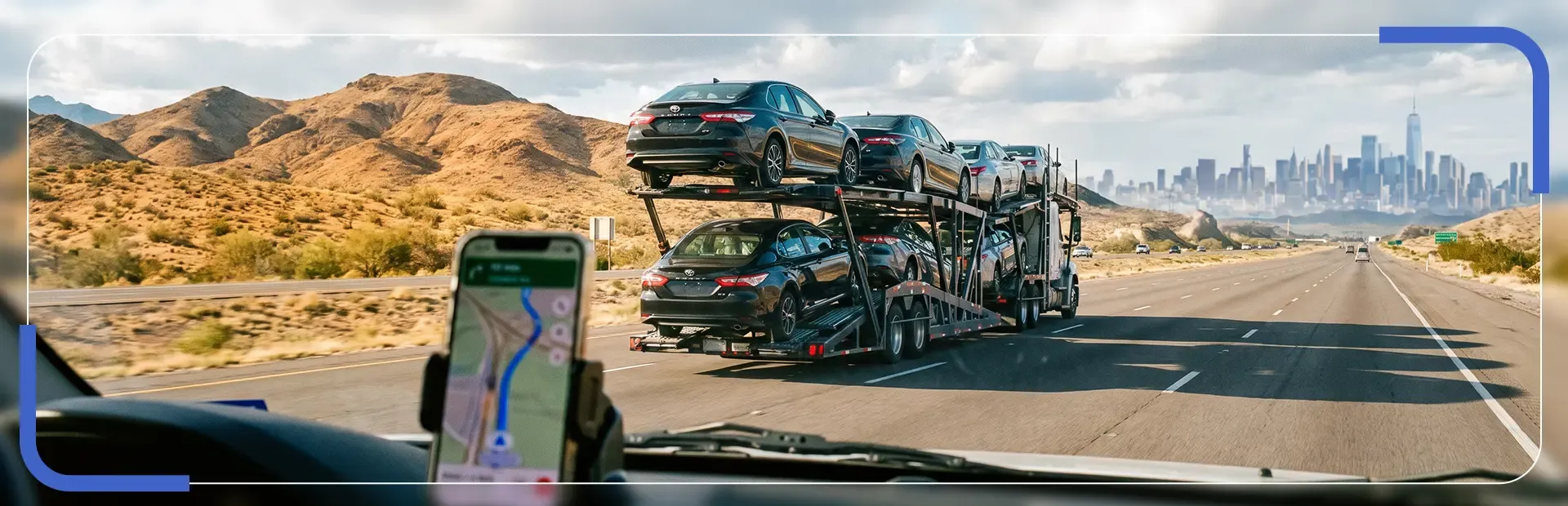
Most shipments take 1 to 10 days from pickup to delivery, and distance is the single biggest factor: regional routes move in a few days, while coast-to-coast shipments take closer to two weeks. Carrier availability, weather, and your choice of open or enclosed transport can shift that window slightly.
This guide walks through realistic timelines by distance and stage, plus how to avoid delays, so you know exactly how long does it take to ship a car on your specific route. Get an instant quote from Safeeds Transport and lock in your price for 7 days.
Key Factors That Determine Your Car Shipping Timeline
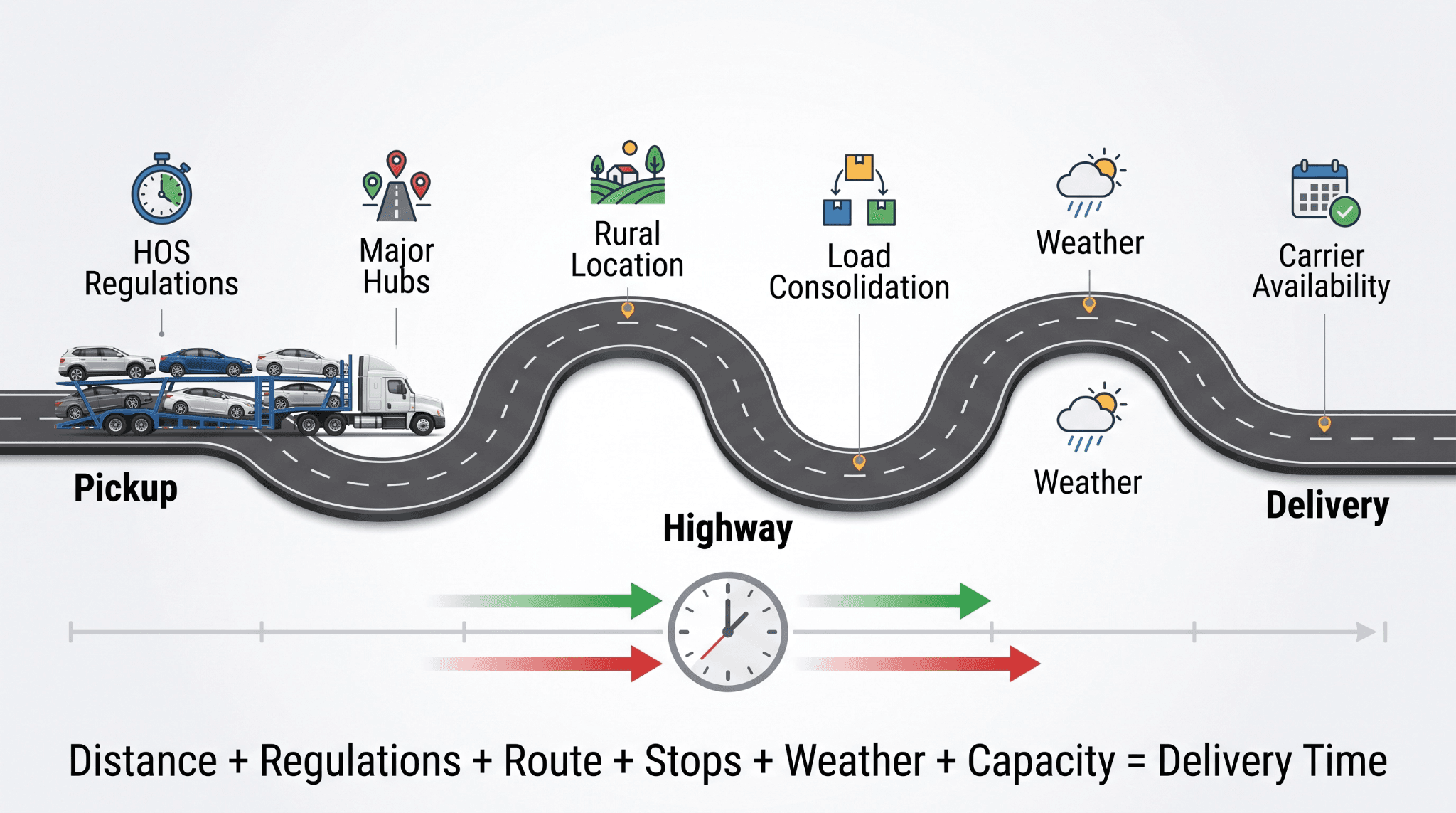
Determining a realistic delivery window requires understanding the regulations and logistics that govern the auto transport industry. A commercial carrier navigates variables well beyond simple driving distance, which is why how long does car transport take rarely has a single fixed answer.
Federal safety regulations: Auto transport is regulated by the Department of Transportation. Drivers must follow Federal Hours of Service (HOS) regulations that limit daily driving time, a core part of interstate vehicle transport compliance.
Route popularity and hub proximity: Shipping between major hubs like Los Angeles and Dallas is typically faster, since more carriers travel that corridor regularly.
Rural vs. metro locations: A vehicle in a remote area adds "off-route" miles, since the carrier must divert from main interstates for pickup or delivery.
Load consolidation: Carriers coordinate multiple stops to fill a truck, a pattern shaped by broader national freight and logistics trends, so your delivery time depends partly on where other vehicles on the trailer are headed.
Weather and season: Snowstorms up north or hurricane season in the Southeast can force carriers to pause for safety, extending the timeline.
Carrier availability and transport type: During high-volume months, trailers fill up faster and you may need to wait for the next available truck heading your way. Open transport, used by roughly 90% of carriers, is generally quicker to book than enclosed, simply because there's more equipment on the road to choose from.
How Does Car Shipping Work From Pickup to Delivery?
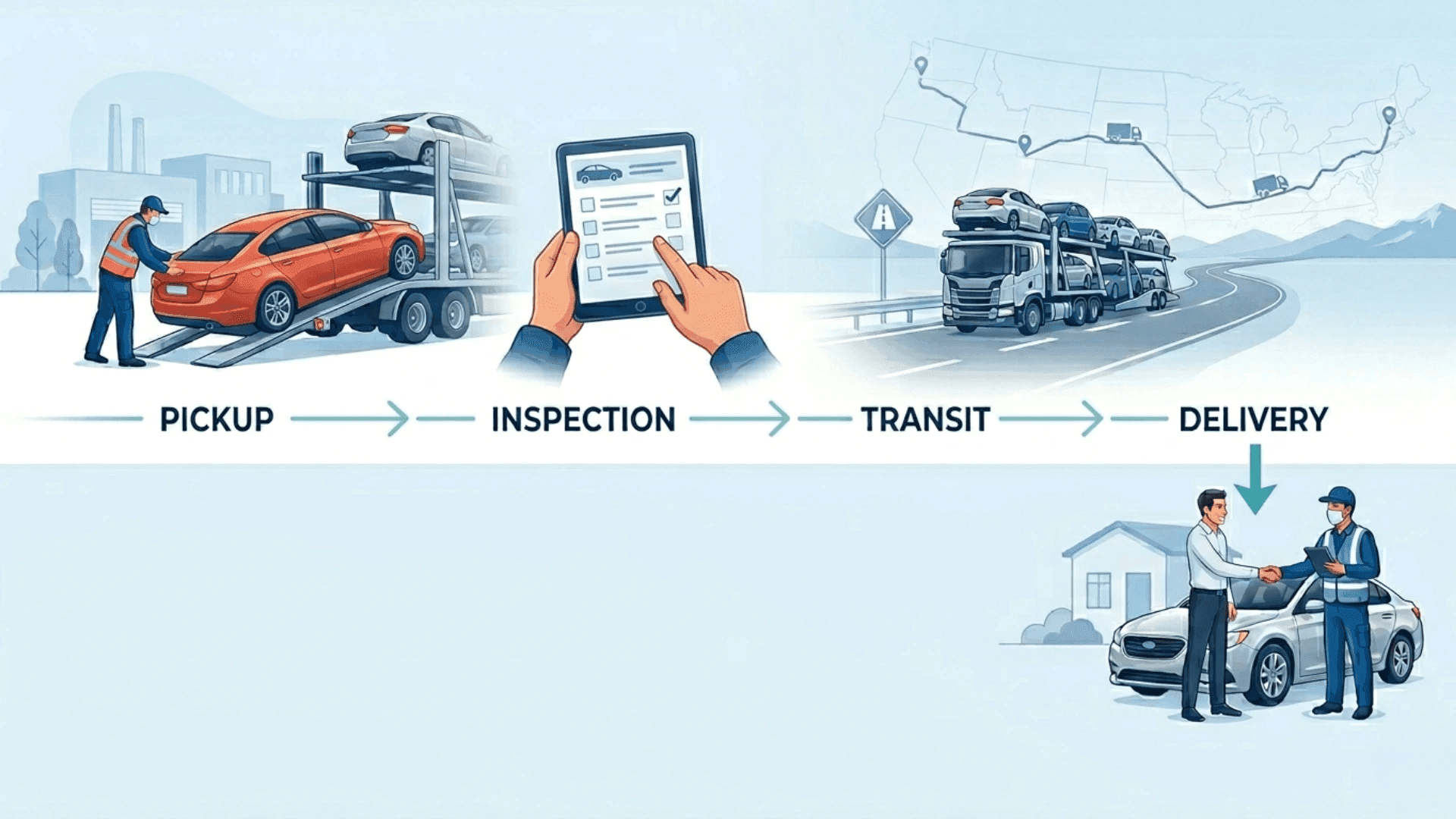
To understand how does shipping a car work in practice, it helps to break the process into four stages, each handled collaboratively by the customer, the broker, and the carrier.
Booking and Scheduling
The process starts by sharing your vehicle details and timeframe. Once you accept a quote, the order posts to a dispatch board where a carrier claims it. This typically takes 1 to 5 business days, depending on route popularity.
Pickup and Inspection
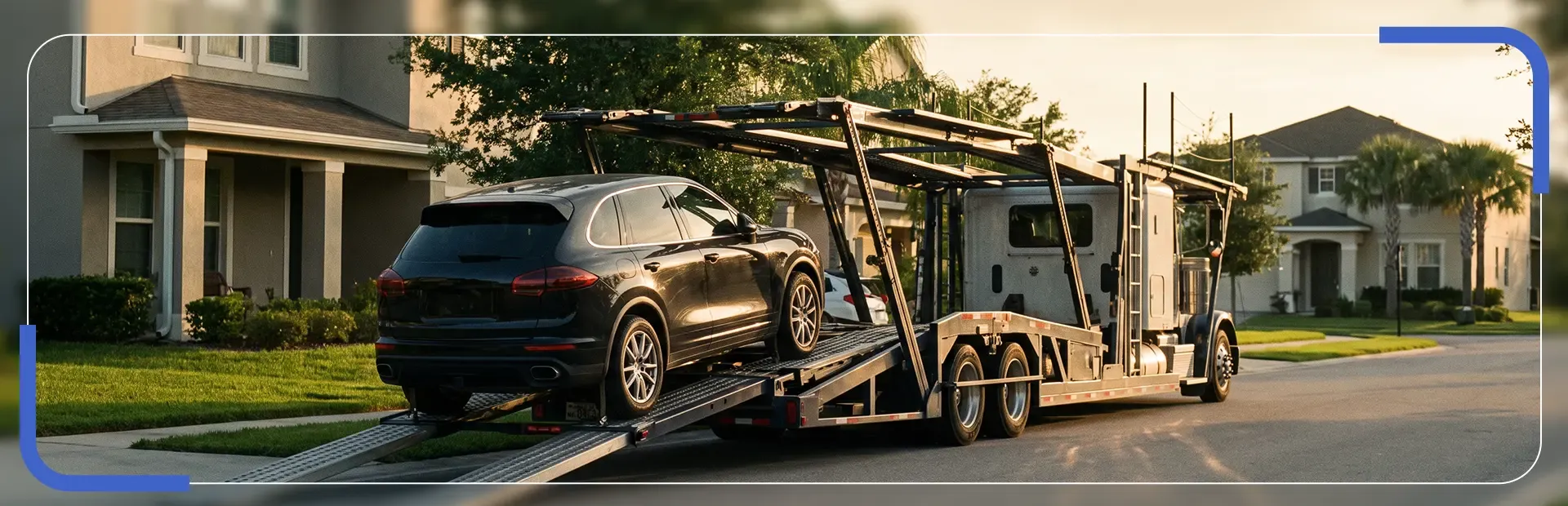
Once a carrier is assigned, the driver arrives and performs a Bill of Lading inspection, noting any existing scratches or dents. This protects both you and the driver. Once loaded, the transit clock officially begins.
Transit and Route Planning
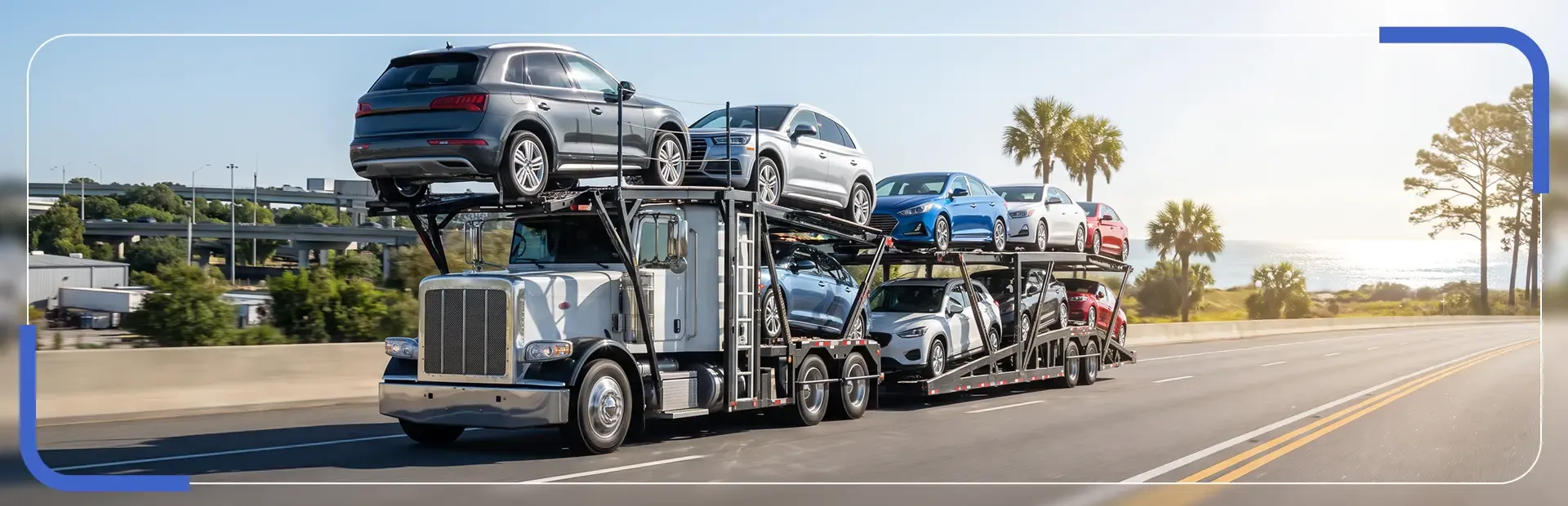
Your vehicle may share a trailer with up to nine others, so the carrier plans a route that accommodates every delivery. The truck may stop several times to offload other vehicles before reaching yours, and these stops are already factored into your original estimate.
Delivery and Final Handoff
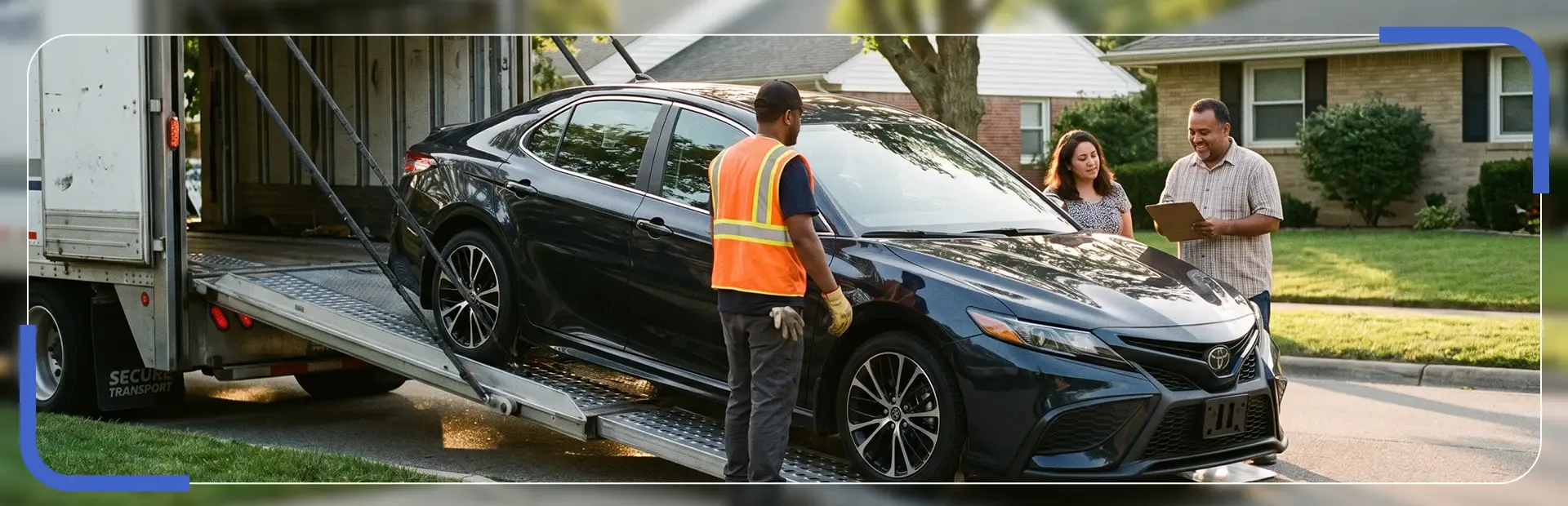
As the driver nears your destination, they'll typically provide a 24-hour and a 2-hour notice. A final inspection confirms the vehicle arrived in the same condition it left. Once the Bill of Lading is signed and payment finalized, the shipment is complete.
How Long Does It Take to Ship a Car by Distance?
While every shipment is unique, the industry follows standard benchmarks. The table below offers a car shipping time estimate by distance, along with a few real-world route examples for context.
Distance / Example Route | Estimated Transit Time |
0 – 500 miles (regional) | 1 – 3 days |
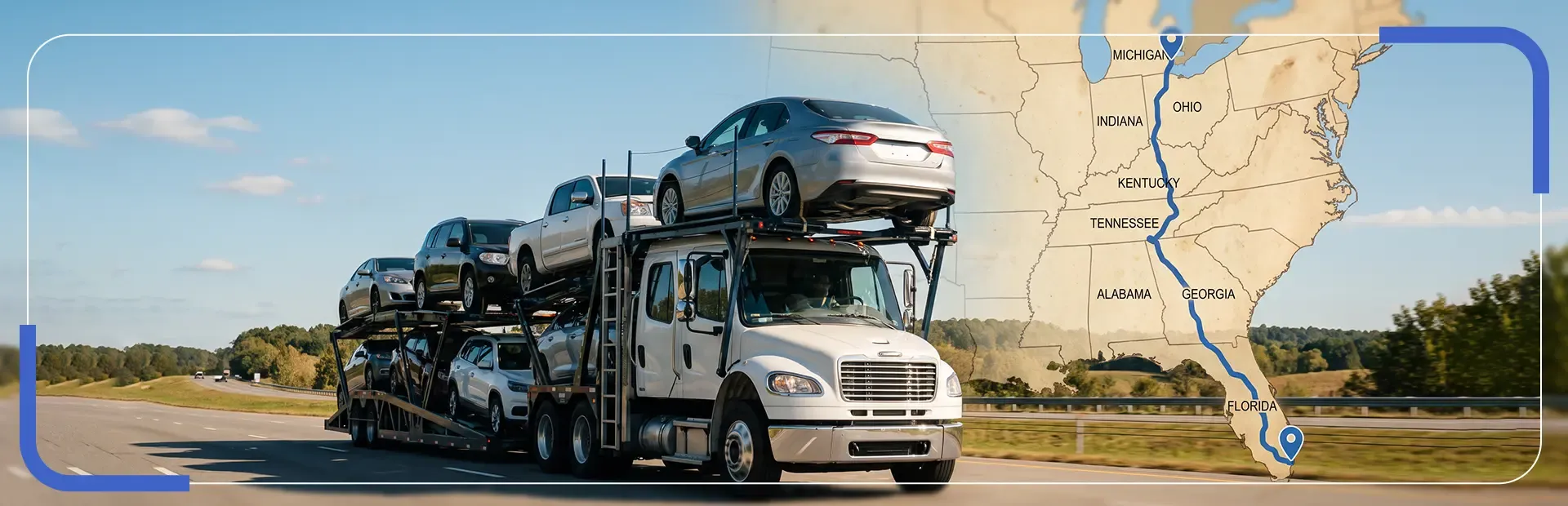
500 – 1,500 miles (e.g., New York, NY to Miami, FL) | 3 – 5 days |
1,500 – 2,500 miles (e.g., Chicago, IL to Phoenix, AZ) | 5 – 7 days |
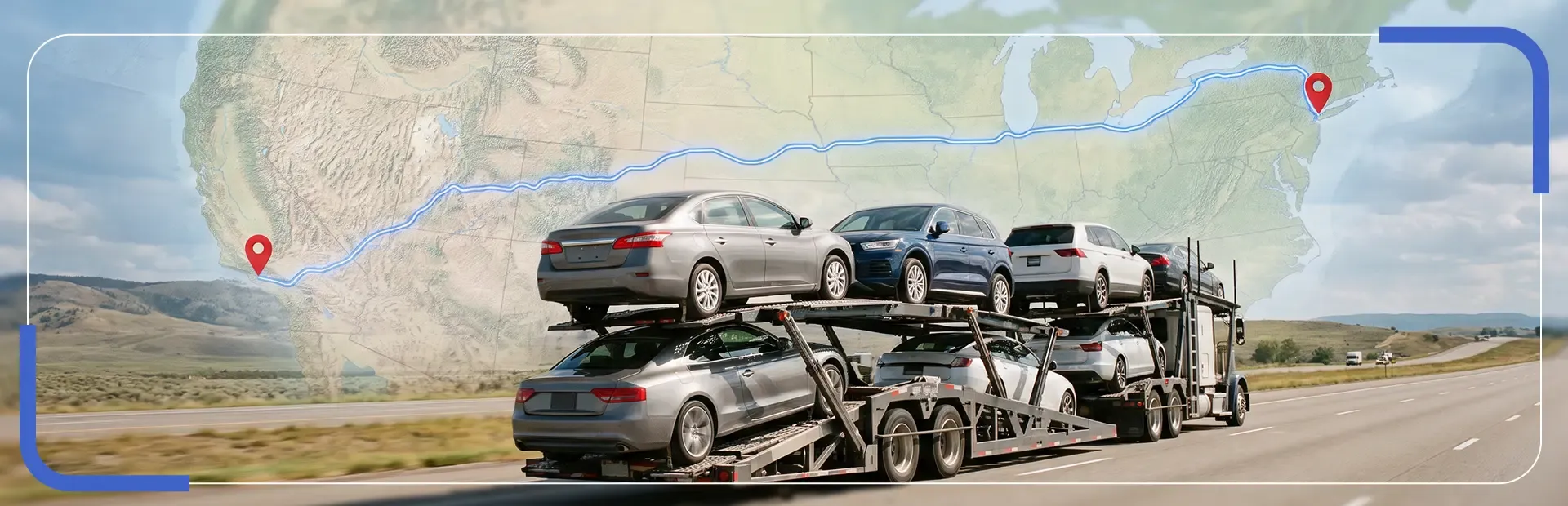
2,500+ miles, coast-to-coast (e.g., Seattle, WA to Boston, MA) | 7 – 10+ days |
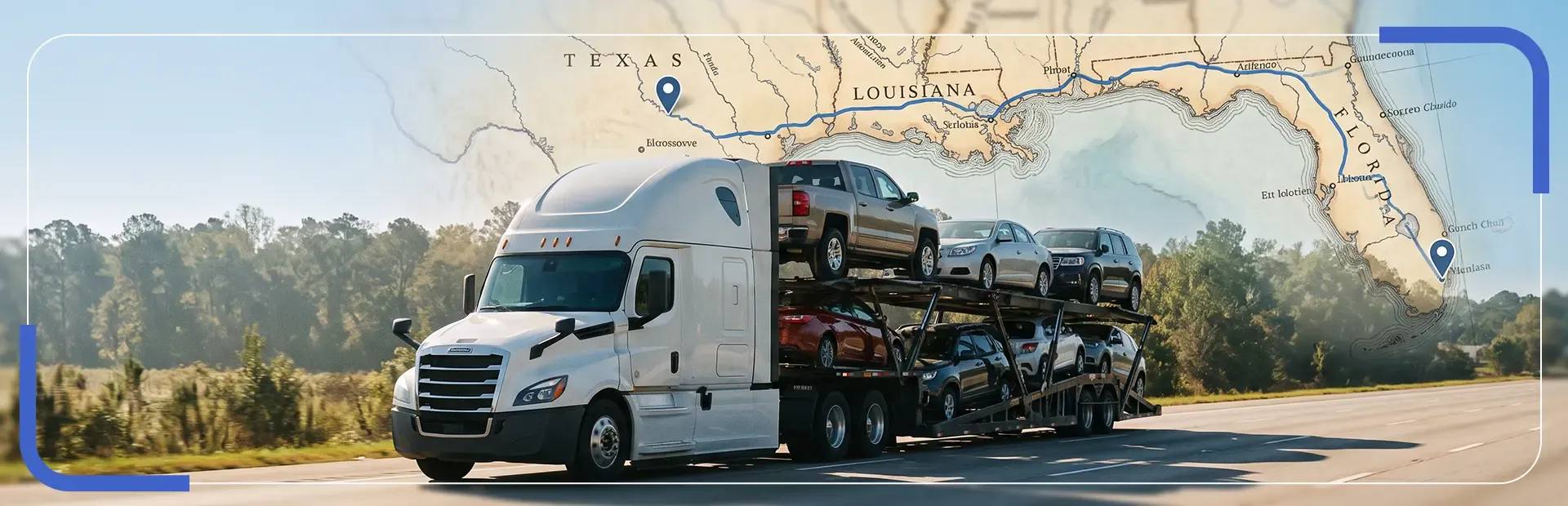
Short routes usually move fastest, arriving within 24 to 72 hours of loading, often via smaller regional carriers. Medium-range shipments take a bit longer, since drivers must follow mandatory rest periods and typically make one or two stops for other vehicles along the way.
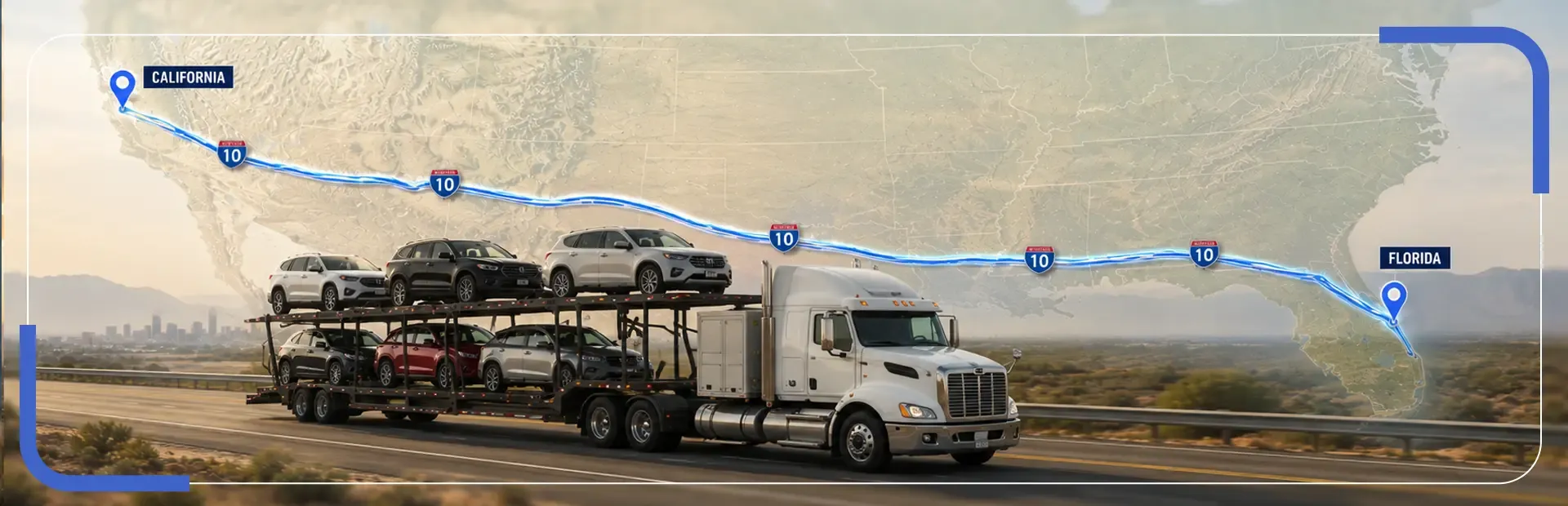
For true long-distance vehicle transport, expect 7 to 10 days or occasionally more. These long hauls cross multiple time zones, and factors like mountain passes or heavy metro traffic can add a day or two. Knowing how long does it takes to transport a car on your specific lane makes it easier to plan your own travel or move-in date around it.
Open vs. Enclosed Transport: How Delivery Time and Cost Compare
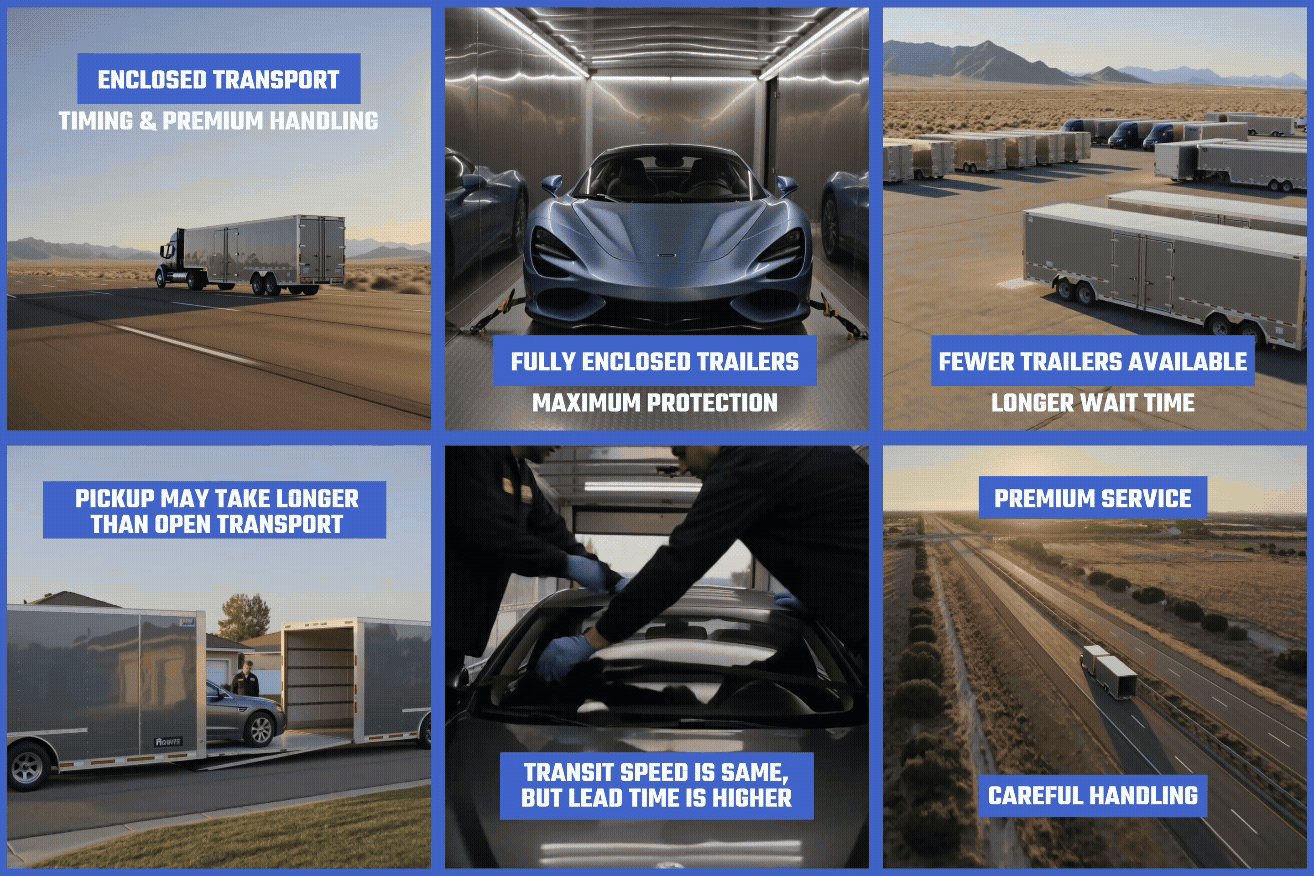
Choosing between open and enclosed trailers affects both your total moving budget and how quickly a carrier can be assigned to your shipment. The two options serve different priorities, so it helps to know what each one means for your timeline before you book.
Open transport is the industry standard, and for good reason:
Roughly 90% of active carriers operate open trailers, so it's easier to secure a spot quickly
Wait times for pickup are typically shorter thanks to this high availability
Trailers carry up to nine vehicles at once, which lowers the cost per vehicle
It remains a fully professional, insured option despite being the more budget-friendly choice
Enclosed transport is reserved for high-value vehicles like luxury, classic, or exotic cars:
Trailers are fully enclosed, shielding vehicles from weather and road debris
Fewer enclosed trailers exist, so it can take longer to find one operating in your area
Highway transit speed is the same as open transport, but securing a pickup spot often takes longer
Loading and unloading tends to be more meticulous, given the value of the cargo involved
How to Avoid Delays and Understand Shipping Windows
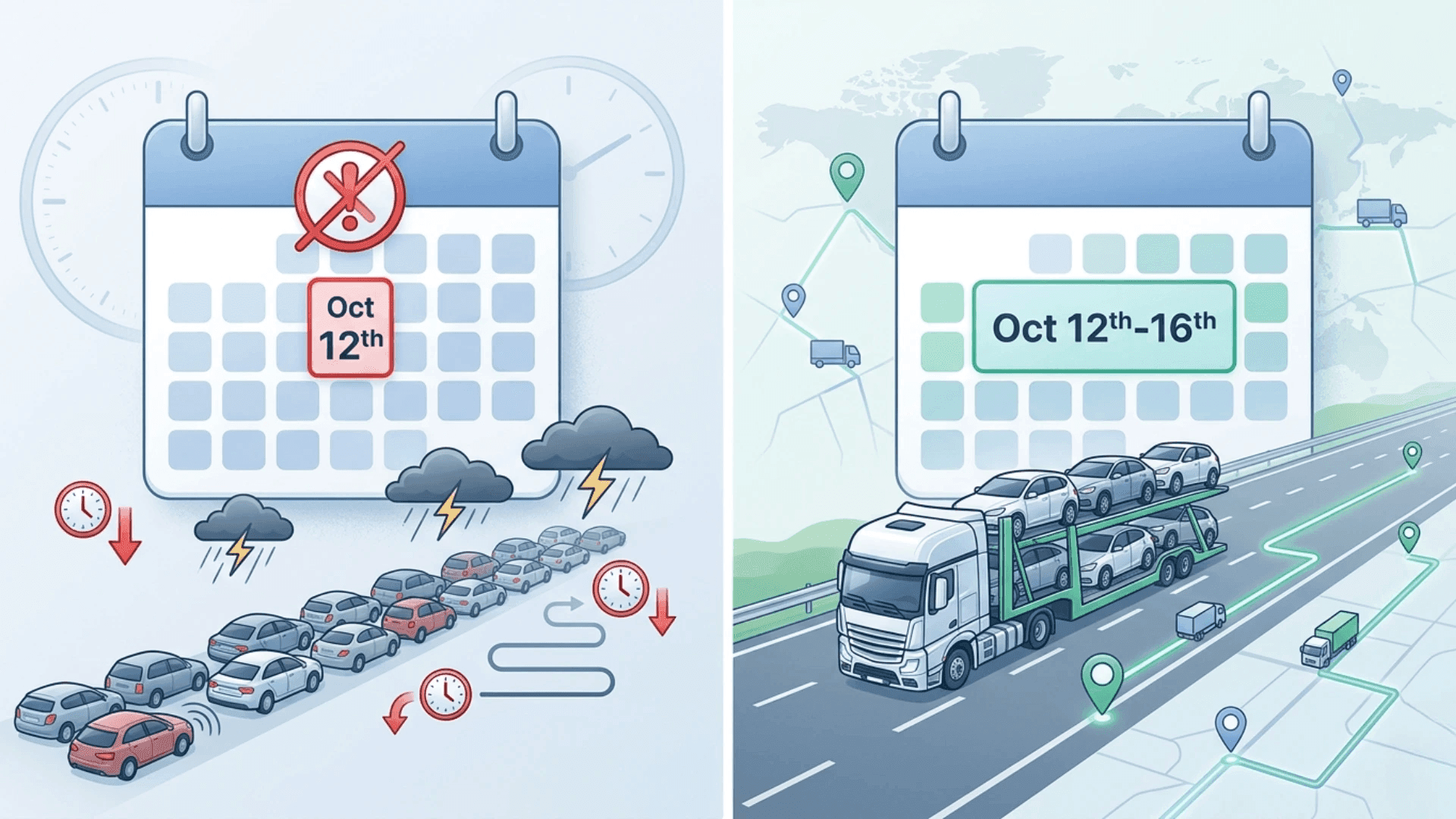
Knowing how to transport vehicles across the country with minimal friction starts with understanding the difference between a fixed date and a window. Traffic, weather, and DOT inspections make an exact arrival time nearly impossible to guarantee days in advance, so companies provide a pickup window and a delivery window instead. Aligning your expectations with these industry norms is one of the simplest ways to reduce the risk of unnecessary delays.
A few habits make a real difference:
Book 2 to 3 weeks ahead: This gives your coordinator time to secure a high-rated carrier on your preferred schedule.
Stay flexible on pickup date: A 2- to 3-day window is far more attractive to carriers than a single fixed date, and often speeds up dispatch.
Confirm accurate vehicle details: Incorrect dimensions or running status can mean a carrier arrives with the wrong equipment, causing a setback that's easy to avoid.
Choose a reliable provider: A strong carrier network means faster reassignment if a truck breaks down, so a single mechanical issue doesn't derail your whole timeline.
When Is the Cheapest and Fastest Time to Ship a Car?
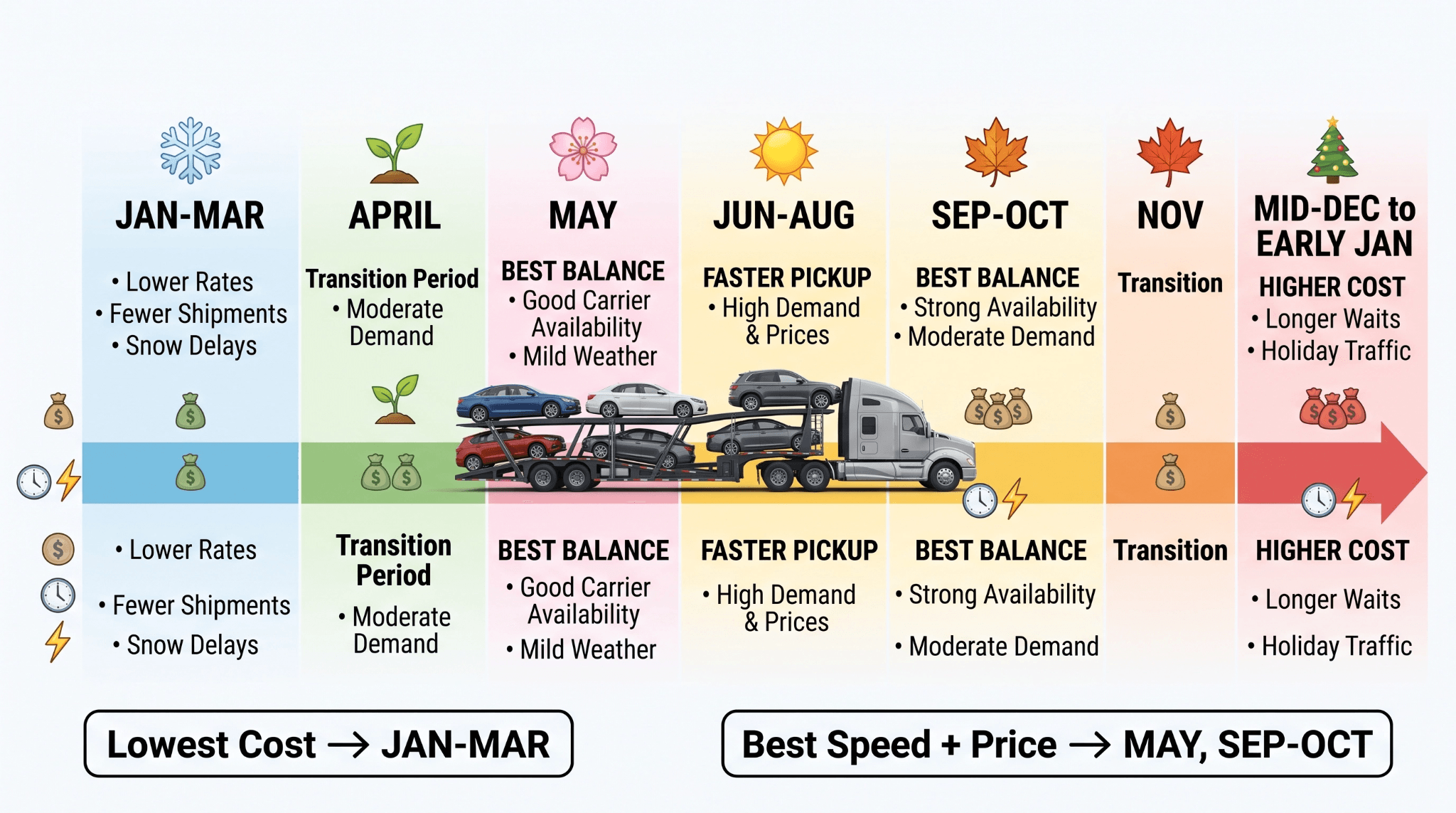
Timing affects both cost and speed more than most shippers expect, since the auto transport industry is highly seasonal.
Winter slow season (January–March): Fewer people are moving, so rates tend to drop. This is often the cheapest window, though heavy snow and ice on northern routes can still cause delays.
Summer peak season (June–August): The busiest stretch of the year, driven partly by students moving for college. More trucks are on the road, but higher demand pushes prices up, even as pickups can happen faster.
Shoulder months (May, September, October): Often the sweet spot, with clear weather and demand that hasn't yet peaked or has started to taper.
Holiday surge (mid-December–early January): Reduced carrier availability and holiday traffic often mean higher prices and longer waits.
If speed matters most, target the shoulder months, when carrier availability is high and weather-related delays are less common. If budget matters more and your schedule is flexible, the post-holiday winter window offers the best rates.
What to Expect Before, During, and After Shipping
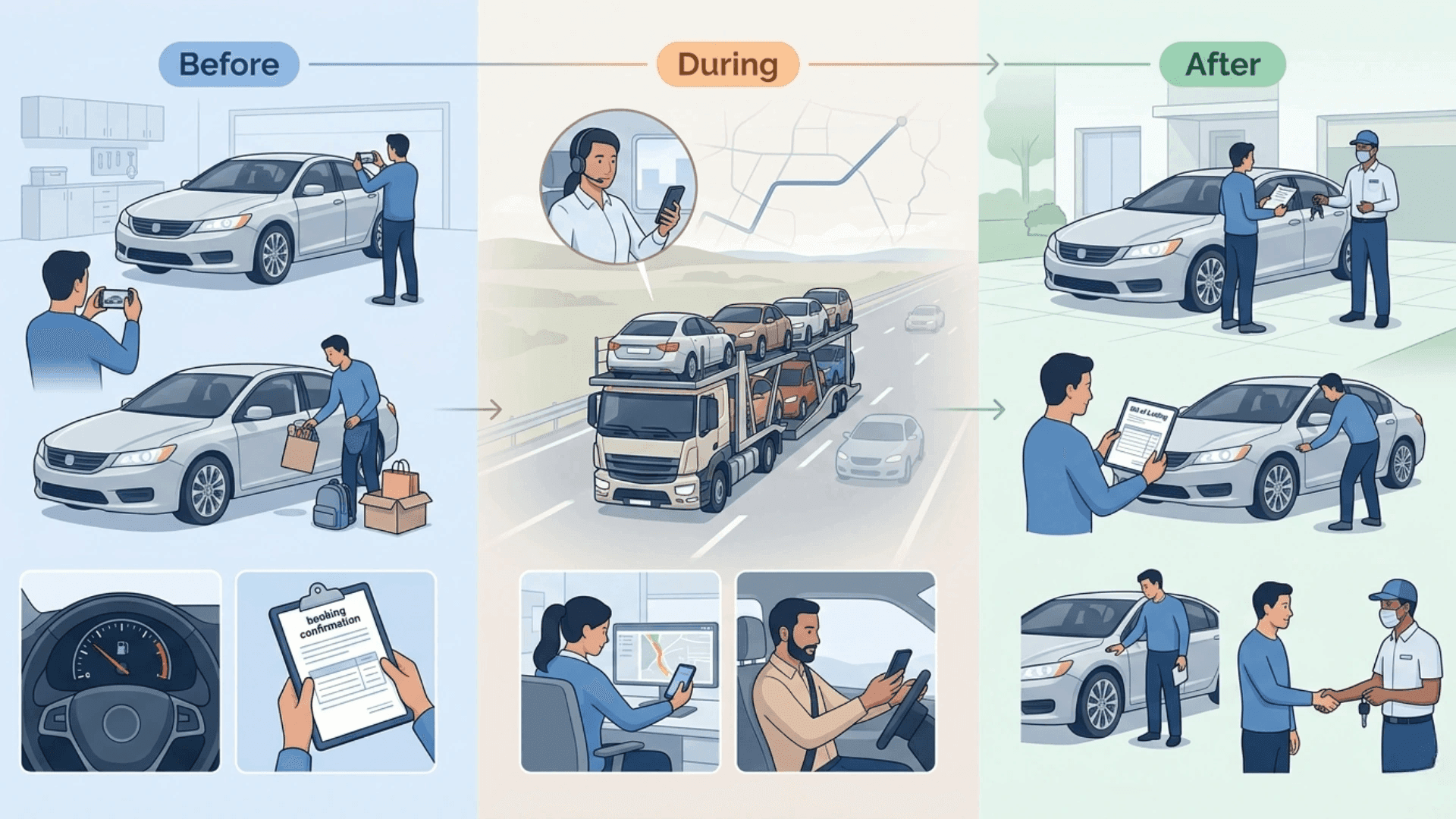
It helps to view the timeline through the lens of the customer experience, divided into three distinct phases of communication and action.
Before: Preparation and Booking
Remove all personal belongings, leave about a quarter tank of fuel, and take photos for your own records. This is also when you finalize your contract, confirming pickup and delivery addresses on both ends.
During: Tracking and Communication
Once loaded, a reputable provider offers updates on the driver's progress. GPS tracking is common, but a direct line to your dispatch team is often the most reliable way to get context on minor delays caused by traffic or inspections.
After: Inspection and Delivery
Conduct a final walk-around with the driver, comparing the vehicle's condition to the original Bill of Lading. Once you confirm everything matches, sign the paperwork to officially close out the order.
Quick Insights for First-Time Shippers
Shipping a vehicle for the first time can feel overwhelming, but understanding the mechanics of the industry simplifies the decision. Whether you're moving for work or buying from an out-of-state seller, the priority stays the same: a realistic timeline paired with professional safety standards.
How much does it cost to ship a car?
Price depends on distance, vehicle size, and trailer type. Comparing open and enclosed options side by side gives you the clearest picture for budgeting.
Is my car insured during the trip?
Yes. Carriers are required by law to carry cargo insurance, and some brokers offer secondary protection for added peace of mind.
Can I put personal items in the car?
Generally, no. Carriers aren't licensed to transport household goods, and extra weight can push a truck over legal limits.
What if my car isn't running?
Inoperable vehicles can still be shipped, but you must disclose this when booking so the carrier brings the right loading equipment.
How do I prepare for pickup?
Clean the car so its condition is documented accurately, and make sure the battery is charged and tires are inflated, even for non-running vehicles.
Making a Smart Decision Based on Shipping Time
Understanding how long does it take to ship a car ultimately comes down to balancing speed, cost, and peace of mind. A provider promising an unusually fast, guaranteed delivery date is often selling a marketing line rather than a logistical reality, since even the best carriers are subject to weather, traffic, and DOT rest requirements.
Prioritize transparency instead. Work with a company that explains the variables, gives you a realistic window, and keeps communication open throughout transit. Setting expectations around distance and industry norms, rather than chasing the fastest quoted date, is what actually gets your vehicle there safely and on schedule, whether it's a short regional hop or a full cross-country move. The shippers who plan around these realities, rather than fight them, tend to have the smoothest experience from booking to final delivery. Get an instant car shipping quote from Safeeds Transport and lock in your price for 7 days.