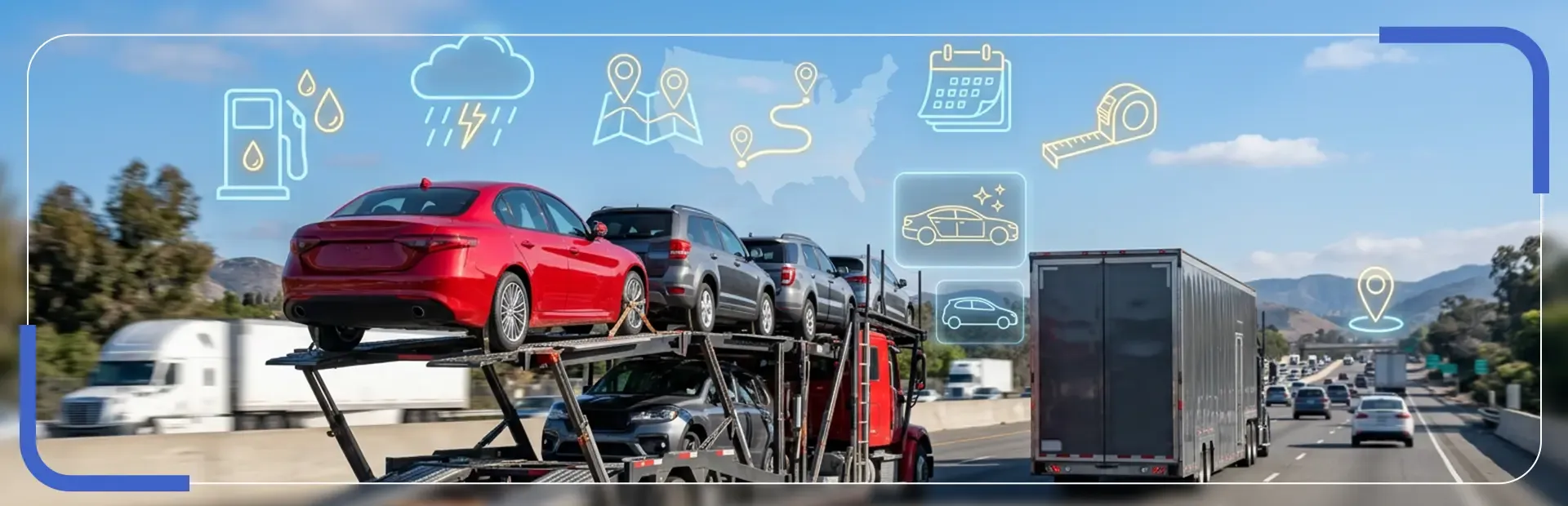
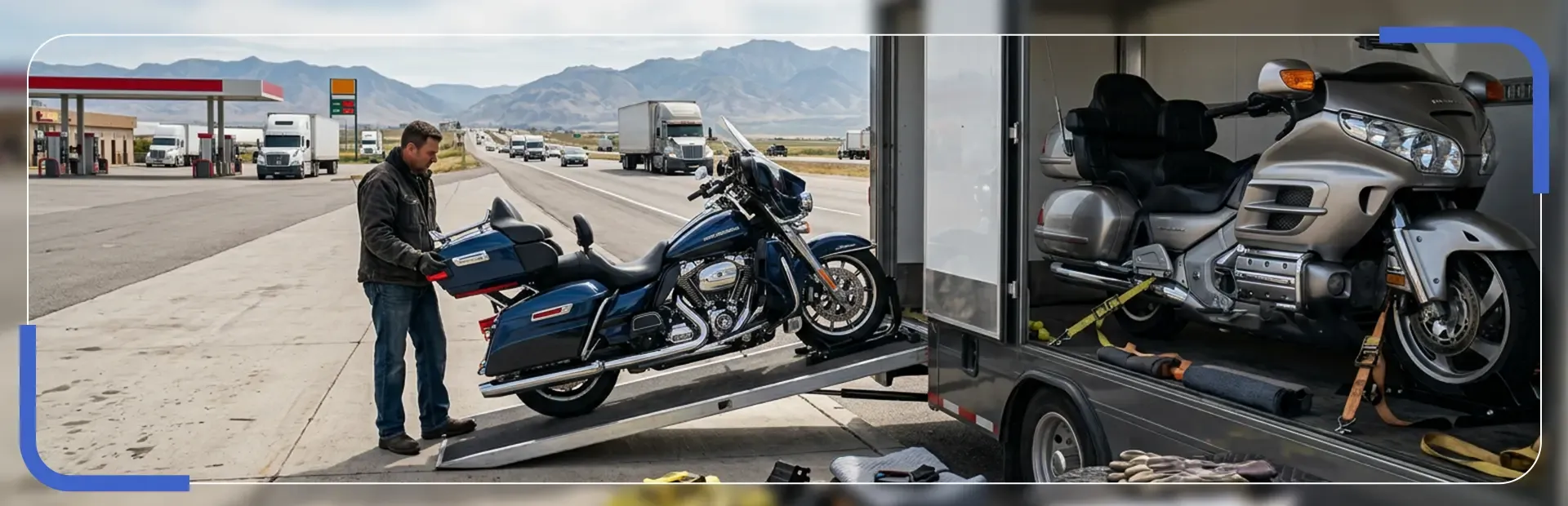
To ship a car, you book a licensed auto transport carrier, choose between open or enclosed transport, schedule a pickup window, and inspect the vehicle against the Bill of Lading at delivery. Most shipments cost $500 to $1,800 and take one to fourteen days from booking to delivery, depending on distance and vehicle type.
A car left sitting unshipped at the wrong end of the country can turn a simple move into a logistical headache. Fortunately, understanding how to ship a car does not require industry experience; it requires the right information, delivered clearly, before you book. This guide walks through each stage in plain language, the complete shipping car experience, start to finish, so you know exactly what to expect from your first phone call to the final signature. Get a free, no-obligation quote from Safeeds Transport in under 30 seconds.
Car Shipping vs. Towing: The Key Differences
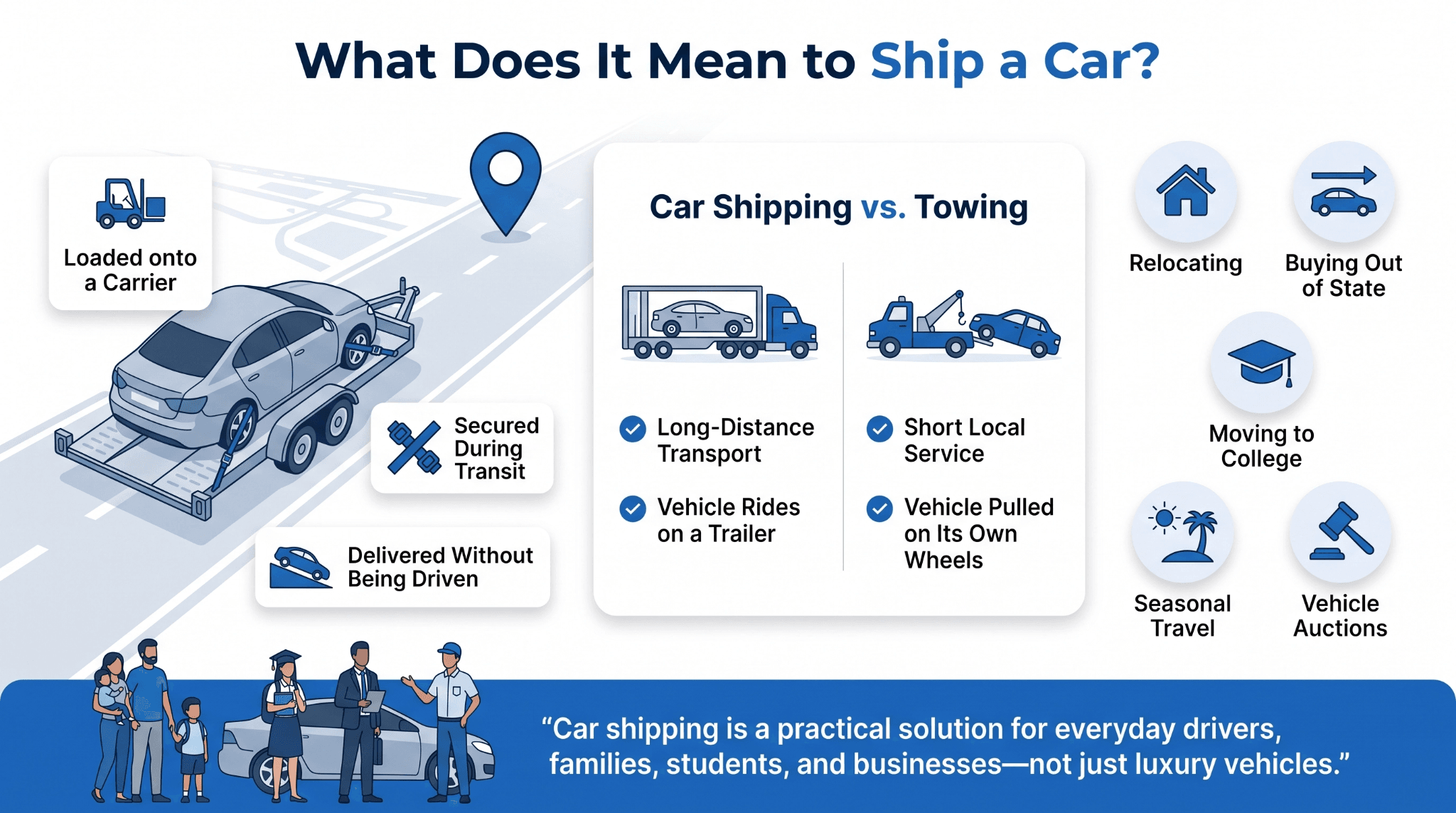
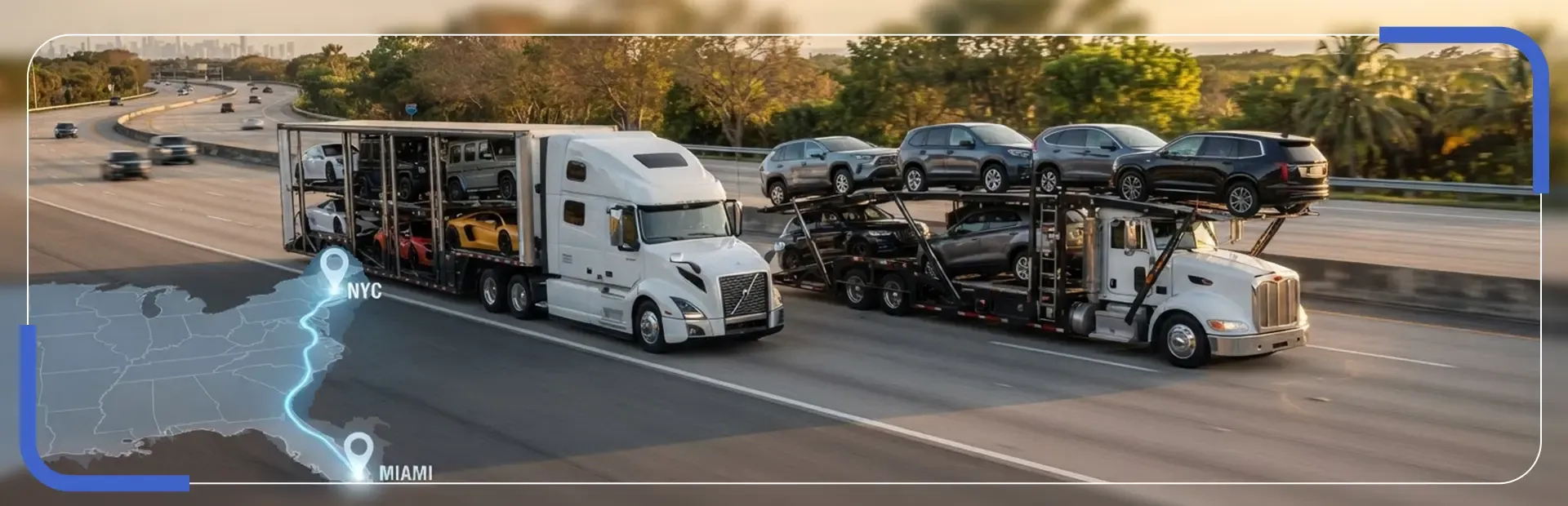
Shipping a car simply means hiring a professional carrier to load your vehicle onto a truck or trailer and drive it to a destination on your behalf, rather than you driving it yourself. The vehicle never touches the road under its own power during transit; it rides secured on a transport trailer for the entire trip.
This is different from towing. Towing is typically a short, local service, often used for a disabled vehicle traveling a few miles to a repair shop. Car shipping, by contrast, is a long-distance, professionally coordinated service designed to move a vehicle hundreds or even thousands of miles. Some people searching for a transport car service land on towing listings by mistake, but the two solve very different problems.
Feature | Towing | Car Shipping |
Distance | Short, local trips | Hundreds to thousands of miles |
Typical use case | Disabled or broken-down vehicle | Relocation, dealer purchase, auction, seasonal move |
How the vehicle travels | Pulled or flat-bedded directly | Loaded and secured on a multi-car trailer |
Timeframe | Same day | 1 to 14 days, depending on distance |
People choose to transport a car for many everyday reasons, including relocating for a new job in another state, buying a vehicle from an out-of-state dealer or private seller, moving to college, seasonal travel such as snowbirds heading south for the winter, and purchasing or selling a vehicle through an auction.
Despite common assumptions, this service is not reserved for luxury or rare vehicles. It's a routine, widely used option for everyday drivers, families, students, and businesses alike.
How Does Car Shipping Work?
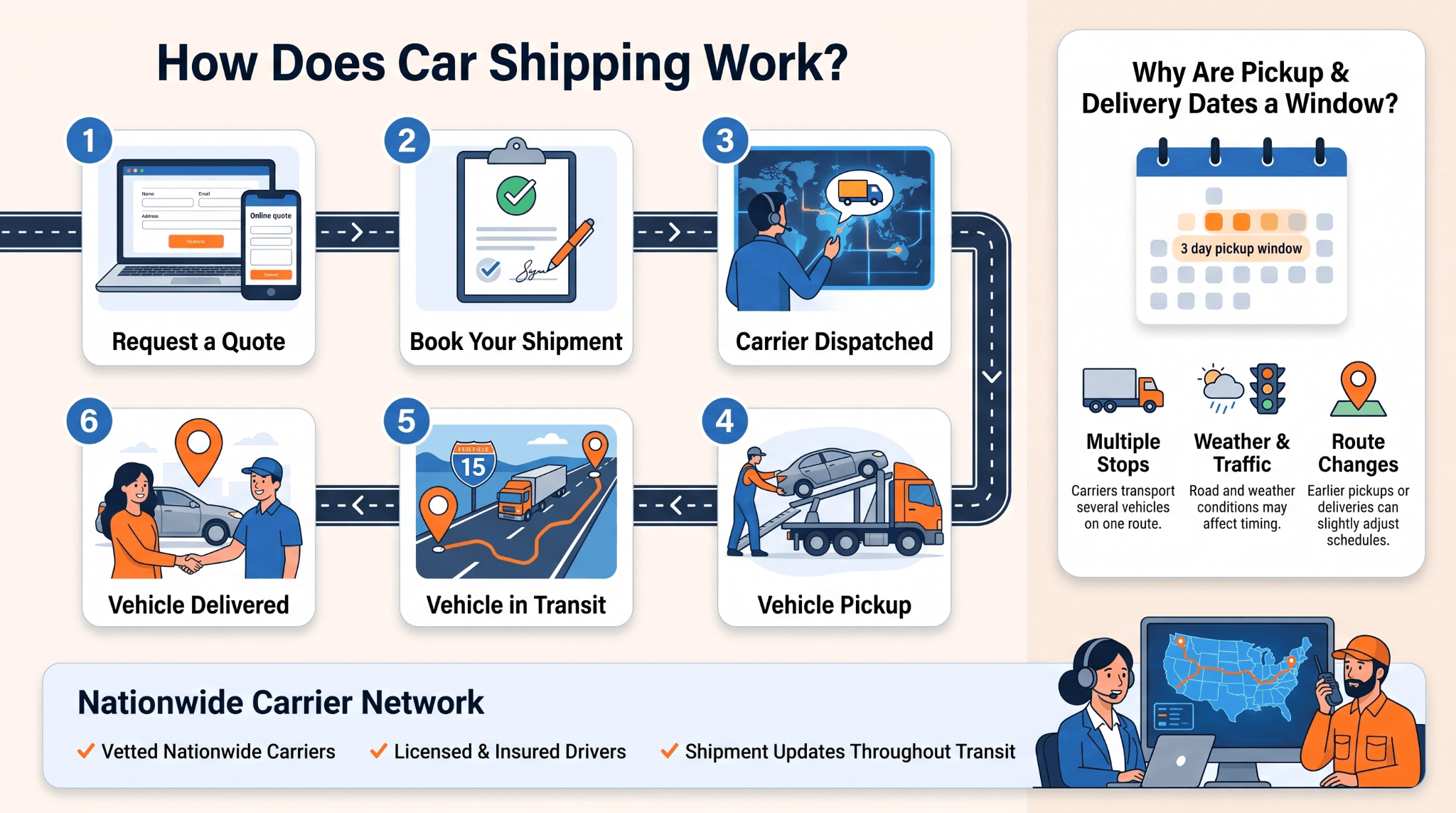
Understanding how car shipping works behind the scenes helps explain why the process looks the way it does once you've booked. At a high level, the car shipping process follows a consistent sequence:
Request a quote
Book a carrier
Carrier is dispatched
The vehicle is picked up
The vehicle is transported
The vehicle is delivered to its destination
Three parts of this sequence tend to raise the most questions for first-time customers: why the pickup and delivery dates aren't fixed appointments, how carriers actually get assigned to your shipment, and who's responsible for what along the way.
Why Pickup and Delivery Dates Are a Window, Not a Fixed Time
Many first-time customers are surprised that pickup and delivery dates are usually presented as a window, for example, a three-day range, rather than an exact appointment time. This happens because carriers plan routes around multiple customers' vehicles being loaded and unloaded along the way, and traffic, weather, or a delay at a prior stop on the route can shift the schedule slightly.
How Carriers and Communication Are Handled
Most car shipping companies, including Safeeds Transport, work with a nationwide network of vetted carriers rather than a single fixed fleet, so the driver assigned to your shipment may vary from one job to the next, though licensing and insurance standards remain the same. Throughout 2026, most reputable companies coordinate the process through phone updates and digital tracking, giving customers visibility into their vehicle's location at each stage.
The Parties Involved in a Car Shipment
Three parties are typically involved. The customer books the shipment and prepares the vehicle. The broker, if one is used, acts as an intermediary who matches you with a carrier. The carrier is the one physically operating the truck and transporting the vehicle.
If a company operates as a broker, the broker itself is not driving your vehicle; a separately licensed carrier handles the physical transport.
How to Ship a Car for the First Time: A Step-by-Step Process
Shipping a car for the first time can feel unfamiliar, particularly if you're wondering how to ship a car to another state, but the process is straightforward once broken into clear steps. The seven steps below show you exactly how to ship a car for the first time, from your first quote to the final signature.
Step 1: Get Multiple Quotes
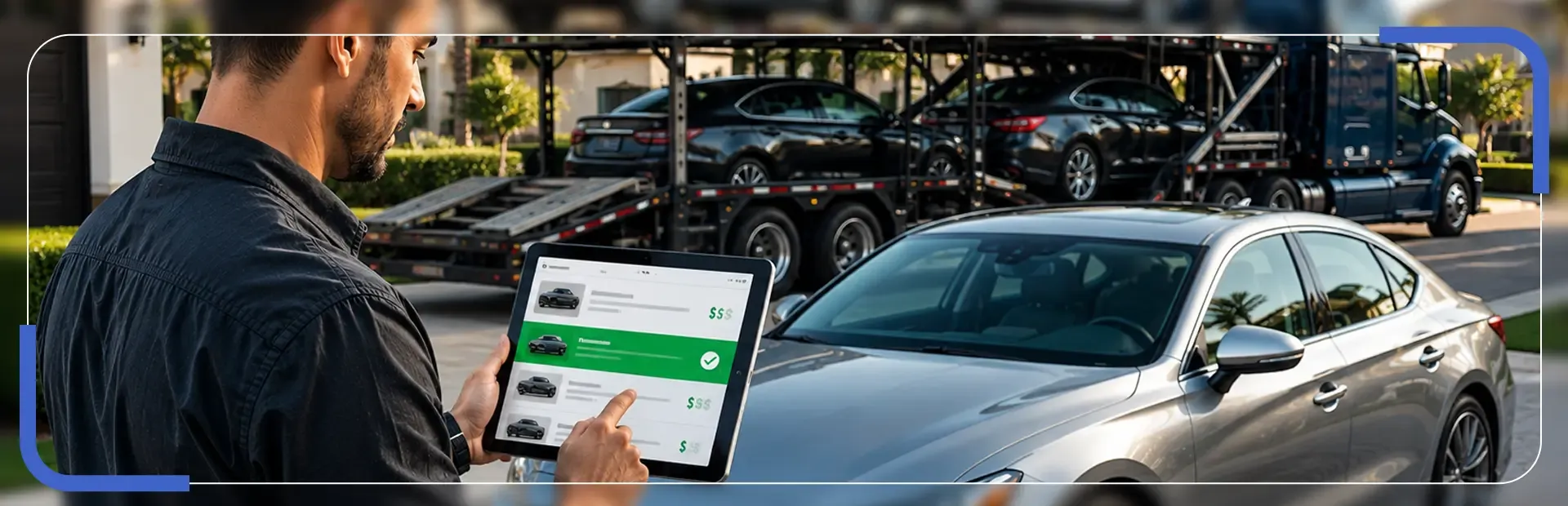
Compare at least three companies rather than booking the first quote you receive. Weigh price alongside verified third-party reviews and what insurance coverage is actually included, since two quotes that look similar on price can differ significantly in what they cover.
Step 2: Choose a Shipping Company
Decide whether a broker or a carrier suits your needs. A broker offers more convenience and wider carrier access, matching your shipment to the best available truck on your route. A carrier gives you more direct communication with the company physically moving your vehicle, but less flexibility if that carrier's schedule doesn't line up with yours.
Step 3: Book the Shipment
Confirm pickup and delivery locations, estimated dates, and payment terms in writing before you commit. A legitimate company will put these details in a contract rather than leaving them as a verbal agreement, and will not ask for full payment upfront.
Step 4: Prepare Your Vehicle
A short prep routine protects you in case of a dispute over damage later. Before shipping your car, work through this quick checklist:
Clean the car inside and out; dirt and road grime can hide existing scratches or dents
Take timestamped photos from all four sides, plus the roof and undercarriage if accessible
Remove personal belongings, since most carrier insurance does not cover items left inside the vehicle
Check fluid levels and tire pressure
Disable toll transponders and car alarms
Leave roughly a quarter tank of fuel, which keeps the vehicle lighter for loading
This isn't just a formality; it's the simplest way to protect yourself if a disagreement over condition arises after delivery.
Step 5: Hand Off the Vehicle at Pickup
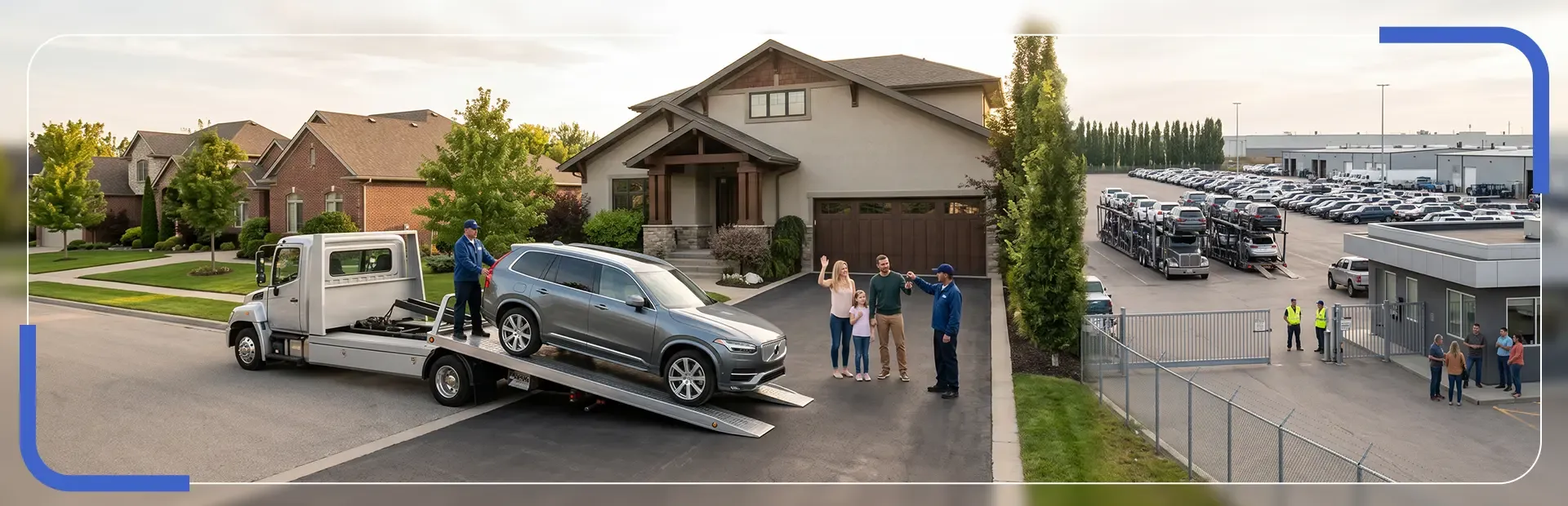
Meet the driver at pickup and complete the vehicle inspection form together rather than signing it after the fact. Walk around the vehicle with the driver, confirm every existing mark is noted, and provide one working set of keys.
Step 6: Track the Shipment
Most companies, including Safeeds Transport, provide a tracking link or direct driver contact for updates in transit. Checking in periodically, rather than only at pickup and delivery, makes it easier to plan around any schedule shifts along the route.
Step 7: Inspect at Delivery
Compare the vehicle's condition against the original pickup inspection report before signing the final paperwork. Inspecting in daylight, when possible, makes it far easier to spot anything that wasn't there at pickup.
What to Expect During Car Shipping
Knowing what to expect during car shipping in advance removes much of the uncertainty first-time customers feel. A few realities are worth planning around.
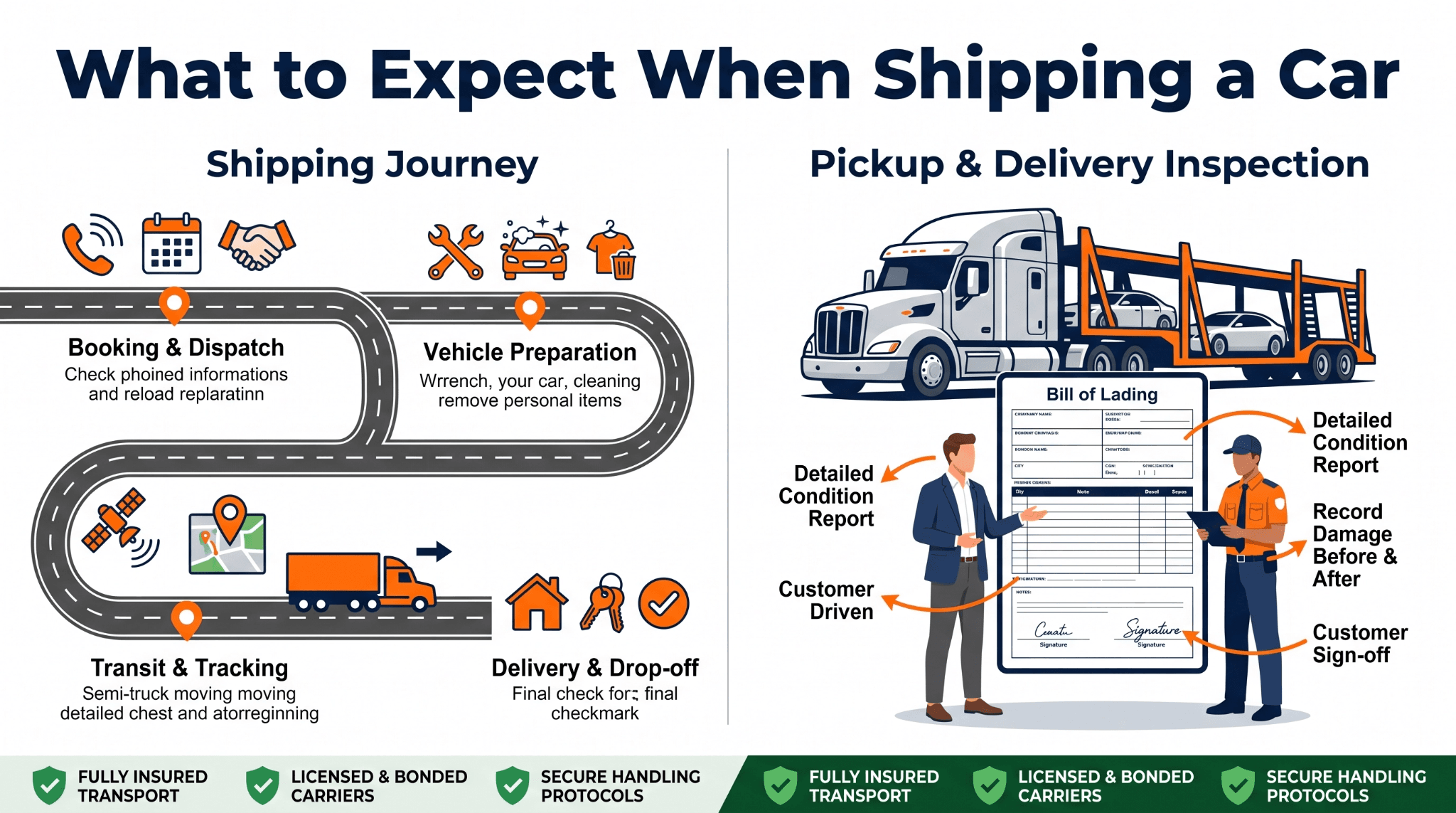
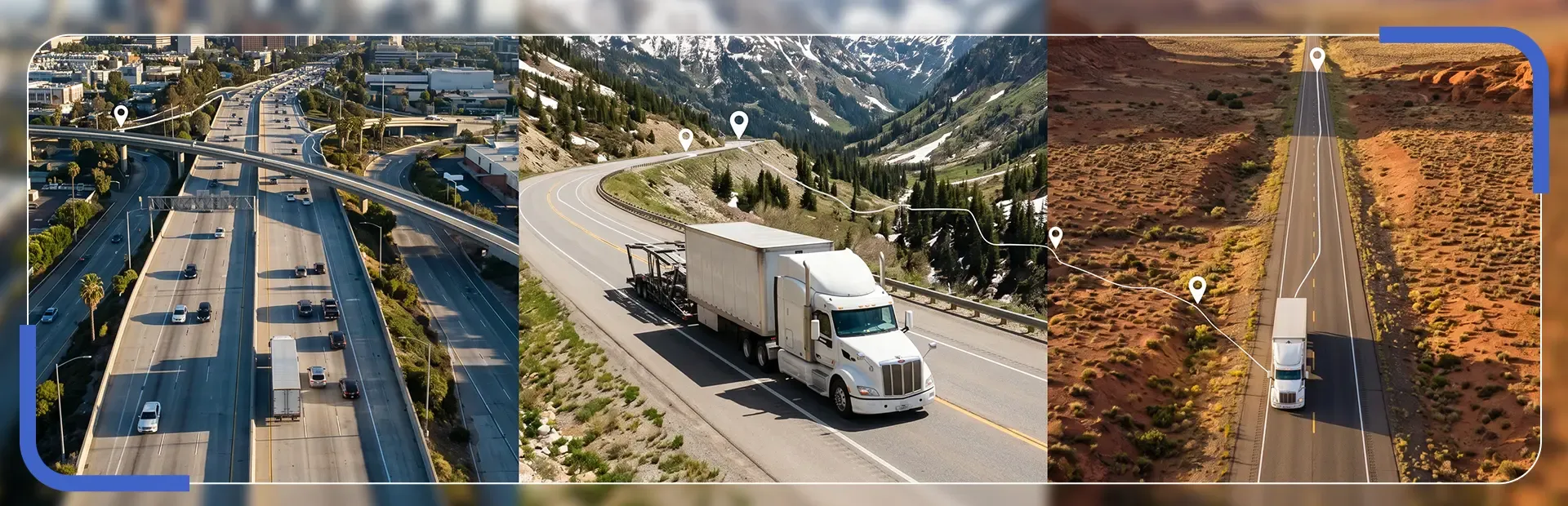
Pickup windows can shift by a day or two due to traffic, weather, or route adjustments; this is normal and not, by itself, a warning sign. Delivery timelines vary by distance: cross-country shipments often take 7 to 10 business days, according to industry transit averages, while regional routes under 500 miles can take as little as 1 to 3 days.
Drivers typically call ahead, anywhere from a few hours to a full day in advance, before arriving for pickup or delivery. Weather-related delays, particularly in winter months, are common and are not a reflection of a company's reliability.
Delays are not the same as red flags. The difference between the two is covered later in this guide, under the section on choosing a reliable company.
At both pickup and delivery, you and the driver will review a document called the Bill of Lading. According to the Federal Motor Carrier Safety Administration, this document records the vehicle's condition, mileage, and any existing damage, and both parties sign it at each stage.
It's worth inspecting the vehicle in daylight whenever possible and holding off on signing the delivery paperwork until you've compared the vehicle's condition against the original pickup report. This document is what protects you if a dispute over damage comes up later.
How Do You Choose a Reliable Car Shipping Company?
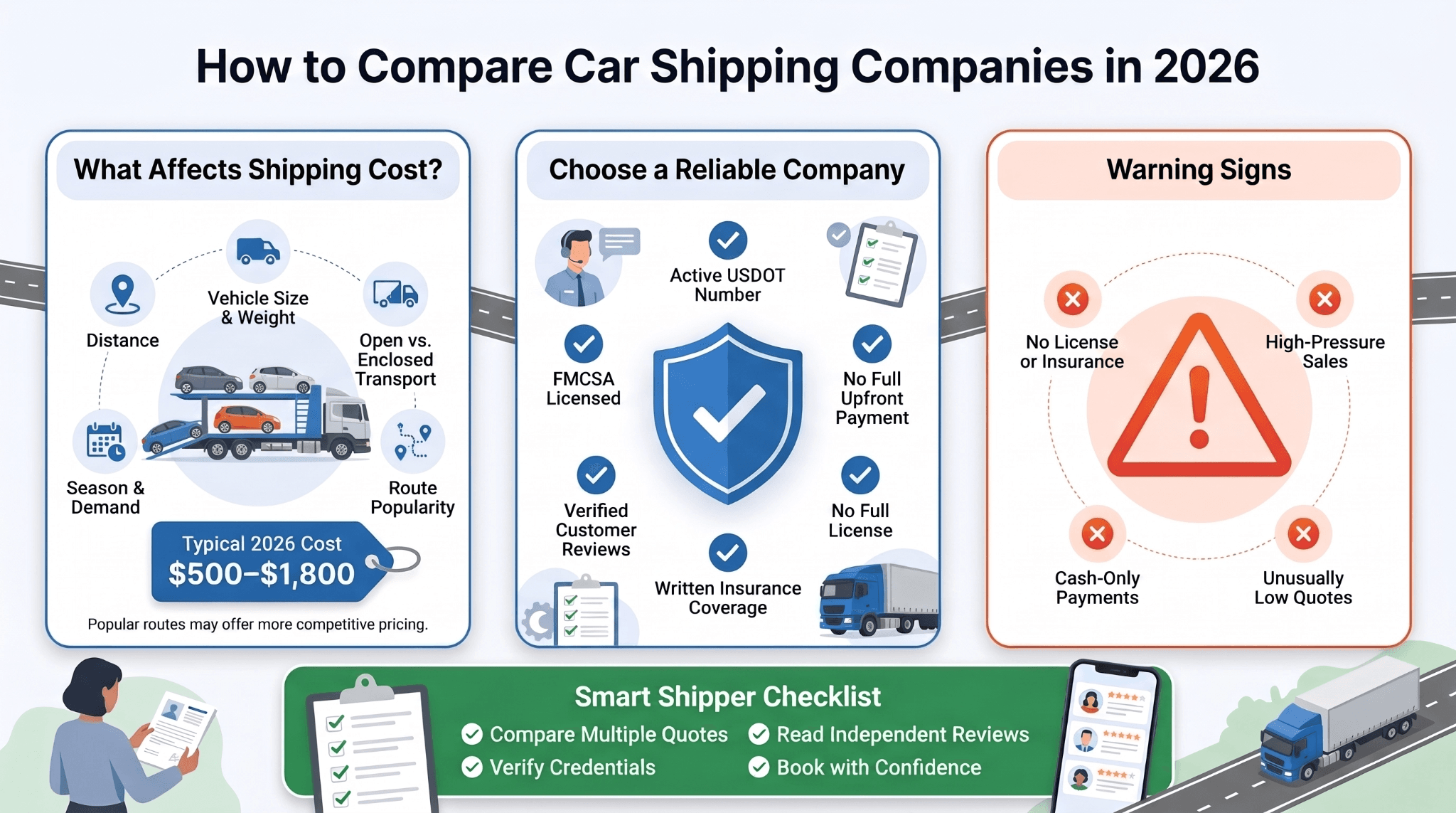
Choosing the right partner is the single most effective way to prevent a stressful shipping experience. Before booking, take the time to:
Verify the company is registered with the FMCSA and holds an active USDOT number
Check third-party review platforms, Google, the Better Business Bureau, and Trustpilot, rather than relying solely on testimonials published on the company's own website
Confirm insurance coverage details in writing before the shipment is booked
Avoid any company requesting full payment upfront; a modest deposit is standard, but full prepayment before pickup is not
Get pickup and delivery windows, along with the cancellation policy, in writing
Safeeds Transport, for example, is FMCSA licensed, bonded, and insured, and does not require any upfront payment to book a shipment, a structure designed to protect customers before a carrier is even confirmed.
Not every delay or quirk is a warning sign, but some patterns genuinely are. Watch for these warning signs when comparing companies:
No licensing or insurance information provided upon request
High-pressure sales tactics or demands to book immediately
Vague, verbal-only agreements instead of a written contract
Requests for cash-only payment
A quote significantly lower than every other estimate you've received
What People Often Wonder Before Booking a Car Shipment
Every first-time shipment comes with a few common questions. Here are quick, straightforward answers to the ones we hear most often.
How long does it take to ship a car?
Typically 1 to 14 days, depending on distance; cross-country routes average 7 to 10 business days, according to industry transit data. We provide real-time tracking updates so you always know exactly where your vehicle is.
Can you leave items inside the car during shipping?
Most carriers advise against it, since standard cargo insurance usually does not cover personal belongings left inside the vehicle. We're happy to walk you through exactly what's covered before you book, so there are no surprises.
Do you need to be present at pickup and delivery?
Yes, or you can arrange for an authorized representative to meet the driver on your behalf. Our coordinators work around your schedule to make pickup and delivery as convenient as possible.
Is car shipping safe for long distances?
Yes, when you use a licensed, insured carrier that follows a documented inspection process at both pickup and delivery. We're fully FMCSA licensed and insured, giving you added peace of mind on every mile.
What happens if my car is damaged during transport?
The signed Bill of Lading and the carrier's cargo insurance are used to document and file any damage claim. Our claims team is on hand to guide you through the process quickly and without hassle.
How do you ship a car to another state?
The process is the same as any other shipment: get quotes, book a licensed carrier, prepare the vehicle, and inspect it at pickup and delivery. Interstate moves simply cover more distance, which is the biggest factor in the final price. Safeeds Transport ships to all 50 states with the same licensed, insured carrier network.
The Bottom Line on How to Ship a Car in 2026
Learning how to ship a car comes down to three things: preparing your vehicle properly, vetting the carrier before you book, and setting realistic expectations around timing. Together, these steps are what separate a smooth shipment from a stressful one.
With the right research, shipping a car is a routine, low-risk service used by thousands of drivers, families, and businesses every year. As digital tracking, instant quotes, and pricing transparency continue to improve industry-wide, the process in 2026 is easier and more predictable than it has been in previous years.
Whether you're moving cross-country, buying from an out-of-state dealer, or shipping a car to college, the same fundamentals apply: know the parties involved, understand what drives cost, and book with a carrier that's licensed, insured, and upfront about timing. Get a free, instant quote from Safeeds Transport today and see exactly what your shipment would cost, with no upfront payment required.